Welcome

Dennis Jones is a Jamaican-born international economist, who has lived most of the time in the UK and USA, and latterly in Guinea, west Africa. He moved back to the Caribbean in 2007. This blog contains his observations on life on this small eastern Caribbean island, as well as views on life and issues on a broader landscape, especially the Caribbean and Africa.

*NEW!!! LISTEN TO BLOG POSTS FEATURE ADDED!!!*

*PLEASE READ COMMENTS POLICY--NO ANONYMOUS COMMENTS, PLEASE*

*REFERENCES TO NEWSPAPER OR MEDIA REPORTS ARE USUALLY FOLLOWED BY LINKS TO ACTUAL REPORTS*

*IMAGES MAY BE ENLARGED BY CLICKING ON THEM*

*SUBSCRIBE TO THIS BLOG BY E-MAIL (SEE BOX IN SIDE BAR)*


______________________________________

**You may contact me by e-mail at livinginbarbados[at]gmail[dot]com**
Showing posts with label Barack Obama. Show all posts

Friday, October 09, 2009

President Obama: Nobel Peace Laureate

Truly Amazing. Perhaps premature. What a week to have. Over seeing your country's failed bid in Copenhagen, Denmark, for the Olympic Games in 2016, then hearing that in Oslo, Norway, you have just won the Nobel Peace Prize. Why? The citation reads "for his extraordinary efforts to strengthen international diplomacy and co-operation between peoples". Remember that nominations closed two weeks after Senator Obama became president. Nice work, if you can get it. Read the Times report.

We do live in interesting times.

Wednesday, July 15, 2009

It Really Doesn't Matter Who You Are

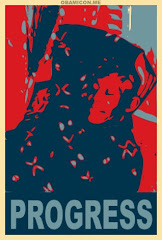
When I travel I like to see which, if any, of the issues that are resonating in the region are also sending vibrations elsewhere. My week in Boston was coming to a close, and my elder daughter and I were on the last day of our quality time together, before she headed back to Virginia and her mother. We decided to go to see the Shepard Fairey retrospective at the ICA (see details). That he had created the now iconic poster of Barack Obama was enough to be excited about. That it was the day of the Major League Baseball All Stars Game, with the POTUS due to make the first pitch was also momentous. So, I'm not sure how we were derailed and ended up instead making a tour of Massachusetts State House, on Beacon Hill and then walking the city in the area around Boston Common. I guess that some civic genes were pulling us that way.

The State House tour itself was interesting enough, given by a young intern on holiday from college. Massachusetts had many key roles in the creation of The Union and its history is so rich that a visit focusing on that is warranted. I was also intrigued to be in a state capital whose governor was a black man, and also a close associate of the POTUS, Deval Patrick.

But on to resonance. As I walked through some corridors looking for my offices, I heard the voice of a man clearly making a set of remarks to reporters, and of all things on health reform (see NY Times report). I listened for a few moments and took a few pictures. As the press report notes, "The new state budget in Massachusetts eliminates health care coverage for some 30,000 legal immigrants to help close a growing deficit, reversing progress toward universal coverage just as the US Congress looks to the state as a model for overhauling the nation’s health care system." The critics' main plaint is that the cut, which would save an estimated US$130 million, unfairly targets taxpaying residents.

The Governor now has a fight on. He has proposed restoring US$70 million to the program, which would partly restore the immigrants’ coverage. But legislative leaders wont have it, arguing that vital programs for other groups would have to be cut as a result. The cut, which would affect only non-disabled adults from 18 to 65 years old, would take effect in August unless the legislature approves Mr. Patrick’s proposal. Ding-dong. Round one.

I thought back to the claims circulating in Barbados about the pressures being imposed on critical services by illegal immigrants. Still waiting to hear some figures, but in the Caribbean "soon come" means something. But, I smiled to myself thinking of the ballooning budget deficit the government there has and that it cannot save money by eliminating coverage for illegal immigrants--they are not covered. Would they think of eliminating it for legal immigrants, though?

The policy now in play in Mass. is the kind of thing that makes legal immigrants say "Hey! That's not fair."

I head back to Bimshire today. I wonder if the vibes from up here will find there way down there.

Wednesday, February 04, 2009

What You Have You Hold.

From the time that president-elect Obama nominated Eric Holder to be the new Attorney General in his administration, Barbados and Barbadians have been keen to associate with Mr. Holder, although he was born in New York City and is an American citizen. Natural enough. His father was born in St. Joseph, Barbados, and went to the USA as a boy. His mother was born in New Jersey, but her parents were born in St. Philip, Barbados.

Jamaica and Jamaicans had had their days when General Colin Powell rose to be President Reagan's National Security Adviser (1987-89) the Chairman of the Joint Chiefs of Staff (1989-93), and then Secretary of State under President Bush (2001-2005). Many were disappointed that General Powell did not make a run for president, but he had his wife's reasons. General Powell was born in New York City of Jamaican migrant parents. Ironically, the Holders and the Powells raised their families in The Bronx, so we wait to hear if there was much if any contact between them during those times.

So, the US now has its first 'African-American' in this position, and one with strong and clear Bajan roots.

Mr. Holder seems to have been a pretty bright guy. He went to Columbia College and Law School and then went to work for the Department of Justice. He was previously a judge (appointed by President Reagan to the DC Superior Court in 1988), and then went to become the first African-American U.S. Attorney for the District of Columbia in 1993. He became Deputy Attorney General under Janet Reno in 1997.

In 2001, Mr. Holder went into private practice with Covington & Burling in Washington DC.

In 2007, Mr. Holder was joined the Obama presidential campaign as senior legal advisor. He served on Sen. Obama's vice presidential selection committee.

Controversy has touched 'our Eric', firstly for his part in president Clinton's last-minute pardoning of March Rich, a fugitive and Democratic contributor. There are suggestions that Holder was pressured by Rich's associates. He was also involved in recent decisions to dismiss certain Justice Department staff.

Now, hopes are high in the Caribbean that the Obama Administration may herald good things for the region. I personally don't see much of that happening, because US interests and those of this region are not necessarily very close. However, heaven help 'our Eric' if he supports legislation that impairs this region. Son of a native son? Let's see how you fare.

What I really love about the passage to the Obama regime and the prevalence of black faces in the upper reaches of the Administration is how the language used to describe its action now starts to get tricky. Think, for example, of the editorial gymnastics when a cub reporter offers, 'Holder heralds in dark days ahead for ...' or 'Obama's AG issues black list of ...'

We live in interesting times.

Sunday, November 09, 2008

What A Vote for Change Represents.

My wife suggested that I read Frank Rich's New York Times column today before I write my blog. Now, my wife knows how hard I try to not let others influence my opinions--almost impossible, I know, but I try to hold a certain integrity of thought. But, in the spirit of coming together that is seizing much of the world, I read the article after I has started to shape my own thoughts (see NYT article) and I will borrow from his piece as a preface to my own thoughts:

"For eight years, we’ve been told by those in power that we are small, bigoted and stupid — easily divided and easily frightened. This was the toxic catechism of Bush-Rove politics. It was the soiled banner picked up by the sad McCain campaign, and it was often abetted by an amen corner in the dominant news media."

America has voted for many things with the election of Barack Obama to be its 44th president.

It HAS voted for a black person to lead the country: undoubtedly a redefining moment for a country that has been built on much bitter racial division between blacks and whites, and which less than 50 years ago had laws that denied black people so many basic rights. Is racism dead? No. It is deeply ingrained in American society and its institutional base cannot be unravelled easily. But, race may now take on a much different relevance. Already there are stories such as "The Great Republican Hope", about Louisiana's Governor Bobby Jindal--37 years old; US-born of Punjabi Indian parents; Brown University [biology and public policy]; then option of Harvard Medical School pr Yale Law School, but went as Rhodes Scholar in political science at Oxford (see Yahoo report). Colour is in.

I think that America voted for a real image of itself in the sense that modern America is not a WASP-ish country, i.e., White, Anglo-Saxon Protestants do not rule the roost. The USA is a diverse country, racially and ethnically, and for the first time at the national level, this has become apparent. It has been evident at local and regional legislative levels for some time.

In doing so, Americans also voted for an intact, black middle class family. This is not a first. But in the same way that much of America got to know the "successful, black middle class" through the "The Cosby Show", they will now see it on national TV in real terms at the head of its nation. Senator Obama joked during the campaign about being accused of being married to the mother of his children, and of not being a drug addict, etc., knowing that for many Americans the stereotype of blacks is more the dysfunctional family than the stable, loving, caring, achieving family.

Barack Obama's principal advisor, with whom he consults on all major decisions is Valerie Jarrett. Ms. Jarrett was born to an African-American family in Shiraz, Iran (must be another Muslim extremist, eh?), where her father, Dr. James Bowman (pathologist and geneticist), ran a hospital for poor children as part of a program that sent American doctors and agricultural experts to developing countries to help invigorate health and farming efforts. The family moved to London for one year, then returned to Chicago in 1963. Dr. Bowman is currently Professor Emeritus in Pathology and Medicine, University of Chicago. Ms. Jarrett's great-grandfather was the first African-American to graduate from M.I.T., her grandfather, Robert Taylor, was the first black man to head the Chicago Housing Authority, and her father was the first black resident at St. Luke’s Hospital. Though Ms. Jarrett has never worked in Washington, her great-uncle is Democratic power broker, Vernon Jordan, a close adviser to President, Bill Clinton. Her mother, Barbara Bowman, is an African-American early childhood education expert and co-founder of the Erikson Institution for child development. Get the picture?

These are not dragged up from the gutter black people. These are not black people who are free-riders and drug dealers, and criminals, and other negative stereotypes; or blacks who had no education and needed to fight against "the system". They worked with and rose through the system. That might have been why those who were from the era of black civil rights struggles were not comfortable. No disrespect to Jesse Jackson, but his rise from adversity was his pillar for moving ahead: racial discrimination was in his veins, even when a star high school and college athlete, which some argue is why he transferred from the integrated University of Illinois to the black college North Carolina A&T.

We, in the Caribbean, have lived with black leaders who have been from educationally solid backgrounds, from families that had stature, and were able to be seen as "fit" for high political office through their intellect or professional achievements. But, for America, this will be a major page being turned. The black middle class has been less visible than it should be and black leaders in business and politics have been less visible than they should have been.

America did not NOT vote for a woman to be president. The women candidates (either Senator Clinton or Governor Palin) were not the best choices. I am sure that Oprah would have been a popular candidate, and there are other women who would not have been lightning rods for opposition. But, I will no doubt hear that women are still looking through glass ceilings. It's not true in politics in the US.

America's white majority (a description not an accusation) determined the result not in their racial favour. It's true that the majority of the 300 million people currently living in the United States consists of "White Americans", and they are the majority in 48 of the 50 states. The dominant racial ancestry of Americans is white European (according to the 2000 Census, Germans (15%), Irish (11%), English (9%), Americans (7%), Italians (6%), etc.). This may reflect a realisation that race did not matter this time. Iowa spurred the Obama campaign from the start. The fact that the vote for Obama was over 55% in states such as Minnesota, Wisconsin, Maine, Pennsylvania, Wisconsin, Oregon, and Washington is not a trivial matter (see Electoral-vote). The fact that the "rust belt" states like Ohio went to Obama and that states like Virginia and Florida went to the Democrats for the first time in decades in not a trivial matter.

America's non-white minorities tended to vote together. Again, according to the 2000 Census, America is made up of a lot of Hispanics (15%), Blacks (12%), and Asians (4%). Black candidates tended to not get the support of the other major minorities.

America voted for a thinking, intelligent person to lead the country, a man whose educational pedigree represents something near the pinnacle in the USA: Ivy League colleges (Columbia University--and one of my children went there too--and Harvard Law School); intellectual recognition (president of the Harvard Law Review (HLR), whose list of alumni reads like a "who's who" of US politics and law). Note that HLR has had its defining moments too in the past 30 years: its first woman president (Democratic political operative, Susan Estrich (1978); its first black president, Barack Obama (1991); and recently elected Andrew Crespo (2008) was the first Hispanic president. Is anti-intellectualism dead? No. But it is not atop the pedestal.

America also gave a vote this time against negativism, and the politics of division and hate. A resounding fall in support for the Republican campaign came soon after the addition of Governor Palin, and it fell further as the negative politics of "guilt by association" was allowed to show its ugly face. I personally believe that John McCain could hear echoes of his name ("McCainism") being used like that of Joe McCarthy with witch hunts of communists ("McCarthyism"). I am totally in accord with Frank Rich about the "toxic catechism of Bush-Rove politics".

American votes were enthused. Recent polls show that about two-thirds of Americans have expectations of their president-elect that are headed by positive terms like "optimism", and show that only about one-quarter or one-third hold negative notions like "fear".

President-elect Obama said in a CBS interview on October 30 that he "does not tolerate drama" or "people pushing others down to get themselves up". That is a message of civility, but during the presidential debates, for example, Senator Obama's tendency to agree with his opponent was seen as "weakness". I never took that view. I believe that he is a bridge builder and in that sense, one has to show "a willingness to go across". Many politicians are not capable of thinking this way and working this way. With the new president, I have to hope that "change goin' come" in this regard.

The candidate whose mantra was "change" is not a revolutionary. He was accused of "palling around with terrorists" (Oh that pathetic charge!). But he was not accused of "palling around with pillars of America's society"). President-elect Obama's campaign was been stiffened by many older and wiser heads: Paul Volcker stood head and shoulders above many, literally and figuratively. He has indicated that he likes continuity if it means following a better line. he has indicated that there must be cross over, such as bipartisanship. He extended the hand for collective solutions to his defeated presidential opponent. There is much talk already of keeping on certain key officials from the current administration. That may not be popular with partisans. As someone who lived through several wasted decades of British politics of "stop-go" where Labour or Conservatives wanted to make their mark by breaking down all that their predecessors had built. I know what I think makes sense.

The president-elect is a realist. He has already indicated that the change wont be in one year or even one term. I do not think that he is a "nice guy". His political rise from Chicago shows that he has elbows, which he uses with vigour. But, it also shows that he knows how to get people on his side.

This is but the start of an amazing journey.

Saturday, November 08, 2008

Sophistication.

People who regard themselves as sophisticated should know the origin of the word. They are supposedly, after all, worldly wise. To sophisticate means to make things make less natural or innocent, which usually means by a process of refinement, like education, or to make something more complex such as through mechanisation. Having become sophisticated, of course, it's probably impossible to remember when things were simple and innocent and unrefined. The word also means to alter and make impure, as with the intention to deceive. In fact, sophistry is using specious arguments (sophism) to deceive someone.

Sophisticates know a lot but have also forgotten or never known a lot. You can easily imagine that they know what a cork screw is used for, but probably have no idea how to milk a cow, raise crops, or descale fish. With sophistication comes more division of labour. They know how to push buttons and pull levers on machines, but do not know or prefer not to know how they work and how to fix them when they do not work. Simplest solution is to replace them. There's no need to know how to do the other things: once the wine is being opened, someone else can occupy themselves with milking, farming, and fishing chores. I remember when I first went back to Jamaica in the late 1970s and saw lots of old cars on the streets, still running like new, but clearly having been patched up many times. In England, such vehicles had been consigned to scrap heaps and been replaced by newer models. As cars become more sophisticated, the average owner knows less and less what to do with it except take it to a garage to be repaired. Increasingly, the person who could try to fix a problem him- or herself is being put out to pasture. Sophistication and modernity often find themselves as willing bedfellows.

I'm generally put on my guard when someone says that so and so is not sophisticated. That means that they have not achieved a certain level of learning--this is a form of snobbery at work now--and are therefore near the bottom of the heap of acceptable people. They would thus be greeted by remarks such as "You have not read...[include any piece of literature that has been thought to be influential]? Really!" or "You must read...[include any piece of literature that has been thought to be influential]. It will change your...[life, outlook, etc]".

Sophisticates are usually bigoted, in differing degrees, remembering that a bigot is a person who is intolerant of opinions, lifestyles, or identities differing from his or her own.

Many lessons are going to be drawn from this week's momentous and historical US presidential election results. It's an interesting exercise to try to figure out if Senator Obama's victory was in fact a demonstration of sophistication or not, or a victory for a sophisticated approach. He went back to doing many simple political things: he organized an enormous grass roots/community support structure, which enabled his campaign to track and trace almost every possible voter. He understood that from acorns do mighty oaks grow (no intentional allusion to ACORN): so small financial contributions from many people can turn into an enormous total of contributions. He, of course, would be grabbed by sophisticates as one of them, not least because of his immense learning and apparent grasp of intellectual issues. But is he also a sophist? I have no reason to doubt his sincerity, but then again I do not know him personally. His policies will be interesting to follow to see if indeed he can be all that he seemed to be on the campaign trail. What I have learned is that he is no naive politician; no innocent; a man groomed in the rough and tough arena of Chicago's political affairs, and who rose through it. I will watch with interest to see what kind of sophistication President Obama will bring to his administration.

Wednesday, November 05, 2008

History Has Been Made. A Victory For The People.

Last night's victory of Barack Obama in the US presidential elections was truly memorable. A black candidate has won this race for the first time ever. He did it by an enormous margin (see New York Times report), and carried with him a large victory for Democrat Senators and Congressmen. He beat John McCain in the key states that the candidates had spent months battling over, including Ohio, Florida, Pennsylvania, and Virginia, which voted for a Democrat for the first time since 1964. Put simply, he pulled America behind him. He was not yoked to a mule but did this with his free will and his undimmed spirit. He quickly reached out to those who did not back him and showed that his presidency will be a truly national affair. I know that most black people feel pride so enormous that they will probably take years to really absorb all that has happened so fast and so considerably. But, to me, it's important to start to see America and its politics as a field not of racial division but of racial differences that build national unity. The large crowds that greeted the victory were in keeping with those who turned out at almost every rally for Senator Obama. He is truly popular.

In graciously accepting defeat, John McCain made the kind of moving and sincere statement that could have produced enormous support for him and could have changed the election. We must just wonder why his campaign went to the garbage pail of negative attacks, which backfired so badly they must go down as one of the worst campaign strategies of all time. Admittedly, he was weighed down by the failed presidency of George Bush, who managed to divide his country, set the world against his country, and become one of the most unpopular presidents of all time, with policy blunders piling high.

Senator Obama made a typically moving acceptance speech, playing much on the mantra "Yes we can!" Like the little engine, his train is only just about to leave the station. He has enormous expectations laid on his shoulders. His background in community organizing had helped mobilize millions of voters and supporters who had been lost to and in the system; energized a nation to go out and vote, especially its young people and those who are called minorities. The election scenes yesterday and before were amazing. Was this really America, with people standing in awful weather for hours?

The world has been mobilized in support of Senator Obama, not least in Kenya, the country of his father's birth (where they have declared a national holiday). Celebrations were quickly underway in the US, but also across the globe. Here in Barbados, there was whooping and hollering and clapping, as we ate corn soup and ham cutters and bread pudding and flying fish...and boiled peanuts offered by an American lady, named "Daphne". I know that in Jamaica there was celebration too, with plenty of fish eaten. Japan has a small fishing village named Obama, and they celebrated too for hours. Official endorsements came in fast and furiously.

For me, Obama really represents someone to vote for, with ideas that seem to fit what is needed to make the economic and social landscape of America a place where more people can really say "Yes we can!" That is the message of hope. He reflected this with the story of Ann Nixon Cooper,a black lady now 106 years young and living in Atlanta, Georgia, who had seen it all (see Times report). This victory was for people like her: someone who during her life had been denied a vote because she was a woman and black, who could now put her finger on an electronic screen and cast her vote.

I now have to get on with grooming another possible presidential candidate. Miss Bliss is American and already has been mentioned as a future president. She has about three decades to wait to get her chance. But she will be made to believe that she can do it. God bless America.

Saturday, September 27, 2008

Yes, Mr. President.

We can observe the same events, and listen to the same dialogue, read the transcripts, and come away with very different views about what took place and what it all might mean.

I watched on television last night the first debate between the US presidential candidates and I had several immediate and continuing impressions (see transcript of debate). To me, Senator Obama (Democrat) looked and sounded very polished and tried from the start to make a connection with "ordinary" people--moving from his elitist image toward a constituency that he needs to capture: "... And you're wondering, how's it going to affect me? How's it going to affect my job? How's it going to affect my house? How's it going to affect my retirement savings or my ability to send my children to college?" He was a university professor and in keeping with that began and continued with a style that suggested clear and ordered assessment of issues, for instance with a list of four points that the proposed bailout plan for the financial sector should include: "No. 1, we've got to make sure that we've got oversight over this whole process...", etc. He tagged himself as a decider who was smart: "So we have to move swiftly, and we have to move wisely." He's a well educated man and he wanted to stand on those credentials, but he seemed to want to portray himself as less lofty than others would wish to suggest.

Senator McCain (Republican) began with an interesting tack, seeking to cement the idea that he is truly bipartisan: His first remarks were about the ailing Senator Kennedy (Democrat) and then he immediately went to current Congressional discussions of the bailout plan: "...we are seeing, for the first time in a long time, Republicans and Democrats together, sitting down, trying to work out a solution to this fiscal (sic) crisis that we're in." His further points then seemed to wander into an answer. He had no problem doing that wandering throughout the debate, thinking on his feet in a less structured way than Senator Obama, but with some clear messages nevertheless, whether it was a fixation with cutting government spending and scouring government institutions, or finishing the war with Iraq in a way that honoured the American soldiers.

During the exchanges, Senator Obama clearly tried to tag Senator McCain with a heavy taint of the current Bush administration: "Now, we also have to recognize that this is a final verdict on eight years of failed economic policies promoted by George Bush, supported by Senator McCain."; "...the policies of President Bush that John McCain wants to follow..."; "... under George Bush, with the support of Senator McCain, we've been giving them [Pakistan] $10 billion over the last seven years." In several different ways he posed the question: "how did we get into this situation in the first place?" We got there because of a series of policies implemented by President Bush, and "supported 90 percent" by Senator McCain. Whether it was the financial crisis, the spending that Senator McCain repeatedly said was out of control, the war in Iraq, the tarnished image of the United States abroad. Eight years of Republican rule had got the country to where it was now. A vote for Senator McCain would mean a vote for at least four more years of the same.

Senator McCain tried to distance himself from that, and set himself up as a maverick within his own party--including his choice of vice presidential candidate--and also someone who had a long political record that people could check to see what he really represented: "It's well-known that I have not been elected Miss Congeniality in the United States Senate nor with the administration. I have opposed the president on spending, on climate change, on torture of prisoner, on - on Guantanamo Bay. On the way that the Iraq War was conducted. I have a long record and the American people know me very well and that is independent and a maverick of the Senate and I'm happy to say that I've got a partner that's a good maverick along with me now."

Senator Obama repeatedly looked Senator McCain in the eye and referred to him as "John". Senator McCain rarely looked at his opponent and referred to him always as "Senator Obama".

Senator Obama tried to get his social agenda into play early and often: investment in education, technology, health care, alternative energy. Senator McCain's main platform was cutting government spending.

Once the debate moved away from economic and financial issues and into the realm of foreign political relations, Senator McCain played an interesting card. He was the man of knowledge, experience, and concern with the reality of war and what it might mean to lead a country that was coming from a defeat in war.

Senator McCain also tried a tactic that drew attention to his experience in a different way, by saying repeatedly that Senator Obama was inexperienced and lacked knowledge: "I'm afraid Senator Obama doesn't understand the difference between a tactic and a strategy."; "I don't think that Senator Obama understands that there was a failed state in Pakistan."; "Senator Obama doesn't seem to understand ..."; What Senator Obama doesn't seem to understand that if without precondition you sit down across the table from someone who has called Israel a "stinking corpse," and wants to destroy that country and wipe it off the map, you legitimize those comments."; He doesn't understand that Russia committed serious aggression against Georgia."; "We seem to come full circle again. Senator Obama still doesn't quite understand -- or doesn't get it -- that if we fail in Iraq, it encourages al Qaeda." That's a lot of ignorance to pile on someone, and in the mind of many a point repeated becomes an evident truth/ Add that to the use of the words "naive" and you get a clear picture.

A vote for Obama is a vote for a ignorant, greenhorn, and despite his great communication style, he really does not get it. You would think that warning people against voting for someone who is so ignorant would find a logical counterpart in the person picking a running mate that was full of knowledge like he is. I guess we will have to wait to hear Senator Biden attack Governor Palin in next week's vice presidential debate, for her lack of knowledge and limited time in office, and point out that Sarah just does not understand and suffers from naivete.

My wife is an unbridled fan of Obama's and found all of McCain's "antics" just worthy of "Cheesh!" or "How lame." I have a feeling that supporters of McCain and doubters about Obama may hold on to what they hear repeated.

What I saw of the initial discussion amongst the political pundits suggested that they thought the debate was a tie. The initial poll of viewers gave Senator Obama a 51/38 percent win (see report), including an interesting large lead amongst women voters; McCain apparently failed to get the "game changer" he needed out of the debate to reverse his deficit in the polls. Of course, polls and pundits can be wrong, and on election day, it is more important that people vote for Obama for him to win.

What I saw left me in no doubts in my mind that Obama would be an excellent president, and should be the clear choice of most voters. Those who think the same wonder what others see that leave doubts in their mind. I cannot think like a white man, who has a deep distrust if not hate of black people. I cannot think like a woman, who may feel embittered that her preferred Democrat candidate is not running for this office. I cannot think like someone who feels that a one term Senator with a Kenyan father and white American mother represents something too exotic for me to have as the leader of my country. I cannot think like others who do not support the person who seems to me to be the best candidate by far. But partisanship is not about logic, but about emotions. Politics is about how you relate to people who you want to exercise power. This coming election will be so interesting as a test of whether America can relate positively to the notion of a black man exercising power over the country.