Welcome

Dennis Jones is a Jamaican-born international economist, who has lived most of the time in the UK and USA, and latterly in Guinea, west Africa. He moved back to the Caribbean in 2007. This blog contains his observations on life on this small eastern Caribbean island, as well as views on life and issues on a broader landscape, especially the Caribbean and Africa.

*NEW!!! LISTEN TO BLOG POSTS FEATURE ADDED!!!*

*PLEASE READ COMMENTS POLICY--NO ANONYMOUS COMMENTS, PLEASE*

*REFERENCES TO NEWSPAPER OR MEDIA REPORTS ARE USUALLY FOLLOWED BY LINKS TO ACTUAL REPORTS*

*IMAGES MAY BE ENLARGED BY CLICKING ON THEM*

*SUBSCRIBE TO THIS BLOG BY E-MAIL (SEE BOX IN SIDE BAR)*


______________________________________

**You may contact me by e-mail at livinginbarbados[at]gmail[dot]com**
Showing posts with label Human relations. Show all posts

Sunday, July 11, 2010

Unity Bar Lunchtime Lecture

The next lecture in the series will be delivered on Friday, July 16, 2010, by the Hon. Ronald Jones MP, Minister of Education and Human Resource Development, at the "Errol Barrow Gallery", DLP Headquarters, 'Kennington', George Street, Belleville, St. Michael; his topic will be "Challenges to Formal Education in the Era of Technology - Dilemma and Survival". As usual lunch will be served from 12.30 pm and the lecture will start at 1.00 pm.

Sunday, August 16, 2009

Just Do It!

One great benefit of seeking and finding relaxation is that many good things flow from it. The last few days have proved that once again. I'm in semi-hiding and loving it. I contact whom I need to, when I need to. The rest of the time I enjoy looking out to the sea, enjoying the breezes; meeting new Bajan friends, and making new friends, both Bajan and foreign.

My wife and I had smacked a few balls around yesterday, and I had of course annoyed the heck out of her by wondering how she was off every blessed morning with a coach and her game was not making the progress I would have expected. Cho! A some ting dem a do? So, I had her with a few drills and if she messed up then push ups and star jumps. "You need every ball to go where you mean," I told her. "I want to get exercise," she replied. 'Well, run then,"I added. We then played a match and were at 5-2 in my favour and she accepted my offer to call it quits.

The rest of the day was a mix of watching tennis, having friends join us for pudding and souse, made in residence, chatting about life and economy in Barbados, then dining to the crooning of a one-time tiler as we enjoyed the sea's sounds and some stunning food.

This morning, we had an invitation to play tennis at Sugar Hill. Must be with some sugar daddy. No. Not at all. After tennis, we took breakfast together--about 12 of us. The group was all expatriates: some English, some Australian, some American, one Jamaican, and a Bahamian. We loved the house, designed by another friend of ours. We talked about life after retirement, and opportunities for new business people in Barbados (a post on that will follow).

One person, born in another former colony, and now retired, waxed about how his post retirement presents were so well appreciated when his wife acceded to give them to him. One he enjoys every weekend--the full Saturday edition of the Financial Times; the other he will enjoy whenever he travels--no more sitting in steerage.

I then returned to 'Camp Tuckedaway" and grabbed a little swim in the sea, spoke to a Barbadian international footballer whom I recognised, said goodbye to an English family we had met a few nights ago, then went to my room to write. What a blessed day, I thought. Could I have days like this always?

As I think about what to do next, I recall what I hear so often. "I would just love to take a few days off and do nothing." I often reply, "Then why not just do that?" Then the reasons: the kids, school schedules; the job; the money; the weather; the other people...Blah blah. I just think, enough already. Get up. Stretch the arms. Move the legs and get on with doing what you say you want to do.

It was at 7am that we started and within minutes the heat and humidity were high. Sweat was rolling as much as the balls. We had an early injury as one elderly Australian lady took a tumble, grazed her elbow badly and her knee too. Medical aid was on hand and she was cleaned up and ready to go, but a bit shocked.

Saturday, August 15, 2009

The Ways Of The World


You learn a lot from talking to people. Even ones you have just met can give amazing insights into everyday life that had been hidden from view. Ones you know well can also give a few surprises. Some examples from the past few days.

I have learned that there is a brothel in Holetown, near Sunset Crest. A woman living in the area apparently saw a man she knew walking out of there one morning. She quickly ran back inside, embarrassed, hoping the man would not see her. I asked why would she be embarrassed? She had done nothing wrong; the man was possibly embarrassed. Bizarre logic?

Apparently (and an online search did not give confirmation), Barbados has a requirement that if an estranged parent is leaving the island with a child under 18, then a permission letter signed by the other parent is mandatory. I am not estranged from the mother of my child, so I have never had this to deal with. But, how are officials supposed to know what an estranged parent looks like. Do they wear signs? Bizarre logic?

My wife has a number of strange habits. When she comes home from her trips, and especially if it is late at night and I am asleep, she whirls around the kitchen spraying furiously with Fantastik. phoosh, phoosh. I told her today, that has to stop. She needs to get home, dump her bags and get straight into matrimonial re-engagement at a very high level. She said I could write this. So, whoo-hoo!

When my very good lady started to unpack her bag, she hummed. "Tennis gear? Check. Sarong?Check. Boring book? Check. Bikini top? Check. Bikini bottom? Guess I thought I didn't need that."

What could be better than having truffled scrambled eggs and fried flying fish for breakfast, by the sea? Follow that with a good time with a good book. Take time for an hour of tennis--though a bit hot. Plunge naked into the tub on your roof top suite--BUTT NAKED, THAT IS! Scream like a lunatic. Shower to get off the chlorine. Dress. Descend for lunch. Not a care in the world. Home ade pudding and souse next stop.

Tennis later. World Track Championships later. Usain Bolt. Feeling high as a kite. Like a Jamaican should. No man no betta dan me. To the world!

Saturday, February 28, 2009

Kindling New Tastes

Most people would agree that the past 50-60 years have seen unprecedented technological progress, and most of that has been of the electronic kind. That follows a long period of immense technological progress that was mainly of the mechanical kind, stemming from the Industrial Revolution. The latter period, we tend to characterize as the 'information age', mainly because we have seen the advent of computers as extensions of most aspects of work and home life and with that has come the packaging of large bodies of information that can be transferred without any physical movement of people or things.

After I joined the Bank of England in the early 1980s, I recall the amazement I had when I first came across a fax (or facsimile) machine and the first documents that I received and sent--loan documents to do with Mexican debt and its rescheduling. They were a few hundred pages long and I remember that it took a long time for everything to pass through. At the end, I had a reasonable copy of the blessed thing and could crawl over it at leisure. Then I encountered electronic writing in the form of word processing software and again I was amazed at what could be done with a new machine for me, portable computer--or as it was at the time a luggable computer by Compaq,which for many weeks I would lug between my office and my home (I was very fit and strong in those days). I was quite incredible to see words pop up on the screen and to then edit text and move it around with the click of a few buttons. Man, was I on the cutting edge. Then, documents were still printed out and photocopied, but gone were the days of hours of writing in manuscript, to have it typed to have it edited to have it retyped, etc. My secretary at the time was of course leery of these changes as she could see quickly that only time would stop me from not needing her particular skills of using an electronic typewriter and managing the intricacies of an IBM golf ball.

Time waits for no man it seems, and soon afterwards we moved into another world, that of electronic mail. Now, I could be anywhere in the Bank and I could get messages about all sorts of work subjects, and documents, and offer comments, edit the documents and reply and share all sorts of file. We were still in the late 1980s and my life was moving so fast that I was not sure what more I could handle. In ten years, life moved spending most of my time poring over paper documents and writing on paper, to some scrutiny of paper documents and writing mainly on a machine. We did not have or want at that time documents that were electronically edited, and those who preserved the archives and files were fighting to find ways to manage the new form in which records were being created. From binders with reams of documents we moved to information on diskettes. When there was a fire at the Bank it also showed people the weaknesses of our work practices because many of the new electronic records were never back-up and that meant having to recreate data and documents after the fire.

After I left the Bank and went to the Fund in the early 1990s came the advent of the World Wide Web and Internet pages and searches and spending more hours on the computer rather than just a few, but still having to read through mountains of paper, because the Fund produces documents in reams.

When I was based in West Africa for a few years, while I had all of this technology at my finger tips--with my communications set up by way of a satellite, or a cable connection--I had to watch and work with people who had very little electronic equipment and what was available was limited to certain officials. I had to reacquaint myself with seeing people lugging large bundles of files when it was time to discuss topics, and there I was with a diskette in my pocket.

For someone who loves to write by hand and loves pens, I was thinking the other day how little actual hand writing I now do--mainly jotting notes to myself, writing checks (very few), and signing permission forms for school.

With all of these changes resistance has always been present. People tell funny and sad stories about how some have struggled to make the transition from the world of paper and pen, to computer keyboard, screen and diskettes and now memory keys. People steadfastly refused to use the computers assigned to them and were almost literally hauled screaming and kicking to turn them on and start to work. Word ground down to a halt for some and they began to see the activities dwindle and their participation lessen as they were not following discussions electronically. We know that at the top of many organizations the leaders are not really as au fait with technology as many would like to think. Vice President Biden gave new meaning to that this week when he talked about the 'number' for the presidential web sites to deal with the stimulus package that he will oversee (www.recovery.gov). This VP did not claim to have invented the Internet so I will cut him some slack, but he did look awkward.


We know of CEOs and managers whose computers sit on their desks still covered. By contrast, we have the tech savvies like New York City's Mayor Bloomberg (he of the terminal and who has set his main office up to look like a trading room, and who fired an employee for playing computer Solitaire) and now President Obama (he of the BlackBerry), who appear to be near the front edge.

I was a bit bemused by a conversation I was in last week about reading. Here, an interesting reaction is being played out. Avid readers mainly get their jollies by inhaling the words from a printed page, usually a bookand we can say also newspapers and magazines. Many of these same avid readers spend much working and private time reading documents in electronic form (word processed or now in PDF form). But, somehow, there is a resistance to letting go of the book for an electronic reading device, such as Amazon's Kindle. No one of my generation knows life before books and newspapers, but most of us will know that the printed word was not there many centuries ago. Things were scrawled on stone, on wood, on other materials; if copies were needed then the process had to be started again. We must give thanks to the advent of the printing press, for sure.

But someone protested vociferously that the Kindle is not a book. Well, I can see that. But so what? It contains what I want to read. Those who have moved to this new device will say that by electronically downloading the text that they want they have in the space of a small paper back, maybe 1500 books and a device that will function for two weeks when fully charged. Great for travellers. Imagine being in hospital for a few days or even weeks. Those who are book lovers say "It's not the same". But nor is reading the newspaper online. They will argue that they would prefer to be able to turn the pages of the book, and also a real newspaper, but make a concession with the latter. I know for example that every day I read about a dozen newspapers online before I start work, and they cover the main UK, US, Jamaican, Bajan editions. I also read several periodicals online. My house is only cluttered with the copies of the local papers that are delivered to my house, rather than piles of other papers. One old Bajan wag gave me a reasonable argument this morning: a book is useful if you are in the bathroom and run out of toilet paper. I should really tackle this harder. In terms of the environment, I would have thought that those who urge 'think before you print this e-mail message' and live in the world of the electronic document would be amongst the first to see that buying another printed book has just chopped down the same trees that were about to be saved. I cannot argue with the excited feeling that comes from having a box or packet of books delivered, in a era where so little personal mail is sent. I would think in terms of finances that downloads are usually much cheaper than purchasing a book. I also recall a request sent to me by my wife when I was in Miami airport to look for a particular book. I would have needed to go back through security to find the book shop and perhaps risk missing my flight. It was not bought, after a sales clerk told me that it was not available. But online, it sure is. But I do need too much convincing on this.

The fundamental opposition to electronic readers I am hearing does seem like double-think to me. I was especially bemused to hear the opposition from a doyenne of a book club, and think of the problems sometimes caused because the set book is not available to everyone: "I'll read it quickly and pass on my copy" shouldn't really apply. (I remember the days of a file binder or newspaper making the office rounds and sometimes hitting my desk so long after the events as to be ridiculous.) If everyone had a Kindle texts could be downloaded in minutes, even by those who are off the island on some work assignment in deepest Belize or the jungles of Guyana. Maybe that has not been considered.

I can always handle an argument that is just about a preference, but let's see that for what it is. I am going to try one of these electronic readers over the next few days and will be interested to see if I can read it under the bed covers without a light. If so, that could be worth a year of marriage counselling. I have had a few bad instances with electronic gadgets and water, so would be wary of taking the Kindle to the bathroom, and would be very careful if I am near the swimming pool. But maybe it is less sensitive to damp than say a cell phone. I like it that the size of the typeface can be adjusted. I like it that it can be set to read the book or journal to me: that's so neat as I imagine being tired and having a book read to me. (I could see some parents using that to cheat their kids at bed time, and putting the Kindle on the pillow then walking out while the machine does the 'talking'.) Maybe, there is the 'last bastion' argument at work. True, not all change is good, and certainly not all change is welcome.

Well, I will play with this device for a few days, loaned to me by a friend, and see if it can rekindle my love of reading.

Thursday, February 12, 2009

Social Struggles: Problem Causes And Some Solutions

Society does not change with the passing of laws or the imposition of will; people have to move in a direction that they want to and that takes time both to improve or to deteriorate. People in Barbados talk about how their society has 'done to the dogs' or the Bajan equivalent of 'we have sunk down low'. One has enough evidence on a daily basis to agree that people here behave in less than ideal ways, but that is not unique. Clearly, many adults here think that their compatriots behaved better in bygone days. I think often about how and why a social downward slide occurs. Below are a few observations on two issues: juvenile behaviour and crime.

*****************************
My little daughter goes to one of those 'better' schools in Barbados named after a saint, but all are not saints and some can easily become sinners. I repeat my mantras of 'it takes a village to raise a child' and 'children are what you build'.

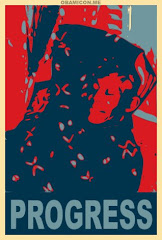
I was at the school last Friday, rummaging through stuff for a stall where people could come and buy the next day. It was adults doing the sorting. A girl, in her early teens, was talking to a class mate, standing by my shoulder, and I heard her snap, "You shut up!" I asked her what she had said (see image above, and click, it moves). "Nothing," she replied quickie-quick. "Excuse me," I said; she shuffled her feet and looked at the girl at whom she had yelled. I put on my Obama mantle. "Look, I said, why are you looking at the person you just insulted? For support? For defence? When you resort to that kind of remark it shows that YOU have lost confidence in yourself and by insulting the other person YOU might have won a verbal battle but have lost a major moral war. She can never respect you again, no matter what she says or what you think." A teacher came alongside midway through the conversation, and nodded as I ended my 'presidential moment'. The girls left, muttering.

I recalled later that I had encountered this girl about a year ago, saying something a bit harsher to another school girl. I wondered where she got her linguistic and moral support. It's probably from her peers, because I hear this phrase a lot amidst the chatter of children here. I rarely see any parent or adult intervene, so some additional support is coming from the indifference of the 'upper levels', if I can call the adults that. I would like to give the teachers the benefit of the doubt and hope that they curb the behaviour whenever they come across it. I am not afraid to.

A few days later, my daughter and I were walking into school. Every child we encoutered we greeted with a "good morning". Most of the children did not respond; some even continued their yawn or their teeth picking ...
*****************************

Is Barbados safe? If you read the local papers on any day you see a litany of crimes, minor and major. 'The courts' section of the Nation today has 'bedroom bully pleads guilty, two facing assault charges' 'murder trial delayed', man on bail in wounding case': we have a range of personal assaults, robberies of persons and properties, rapes, drug dealings, reckless driving, frauds, etc. Barbados does not have the daily carnage of murders that one reads about in Jamaica or the dramatic and terrifying crimes such as frequent kidnappings that seem to be the rage in Trinidad.

Someone asked the other day whether I thought Barbados had a crime problem. I replied that I really did not know if there was a 'problem' but I know and hear that there are crimes being committed, and on a wide geographical scale. In my street of two dozen houses there have been burglaries reported during daylight. I see many homes with 'burglar bars' and several big dogs and warning signs about them: that suggests that people are concerned about intruders, By contrast, when I lived in the Washington DC area, I never had a guard dog (I had a pool of man-eating gold fish), and no burglar bars sullied my windows or doorways nor did my exterior doors have multiple dead bolts nor were they made of steel. I often found that after being out at work all day, the house had not been locked. Admitted, my house was in a dead end, as here, so you entered by mistake or for a purpose; its back was adjacent to a busy road and could offer access to intruders--but these were mainly deer straying to eat my plants or drink from my pond. My wife and I sat on our porch or deck, day and night, and we never had our (non-existent) shotgun on our laps.

I felt safe in both places. Then again, I always feel safe in Jamaica, even in those really dicey parts of Kingston about which my relatives warn me. I take an attitude of 'ever vigilant' based on having lived in a lot of high crime areas, though never having been the victim of a personal attack. I am very wary of people coming to my house, wherever I am, and no one purporting to be from 'the water company' or such gets past my gate if I have not called for them. Badges do not impress me; any fool can make a fake ID. I do not take delivery of packages about which I know nothing; if needed, I check with my wife if she has ordered something. If I do not get a good answer it does not enter my home. I do not suffer from 'stranger danger' but I try to not let certain risks develop.

When I am in a car going home I always check the rear view mirrors (even as a passenger) to ensure that I am/we are not being followed. I always did this in London, and then in Washington. But for about 15 years I worked for an institution that was often a target for hate and more recently I have been in a 'sensitive position' where I or my family could be targeted and some of the training and warnings that I received I had applied before but I had them reinforced. I always get into my car quickly and have it ready to start--a little like putting on my face mask first in an airplane emergency--and encourage passengers to get in quickly, because my car can be a defensive weapon as well as a place of (temporary) security.

When I go to get money from an ATM I always make a visual check of the vehicles parked nearby and note those parked with passengers still inside; I keep my self sideways on so that I can see out of the enclosed area. Unfortunately, in Barbados, most of the ATM booths have locks that do not work and do not need the card to be opened. When you point this out to the bank staff you get that customary 'not my problem' shrug of the shoulders. If I get robbed in one of those ATM booths I will gladly try to sue the a*** off the bank for at least contributory negligence.

If I go to play tennis around dawn, I always check for casual passers by and usually wait for at least one person to arrive whom I know before I go off and leave my things unattended. And so on.

I do not see this as paranoiac, but just sensible precautions.

Barbados does not have much crime involving firearms, but some are being reported. Knives and machetes (Collins knife) are more common, as are sticks and fists (oh, the good old days). I have heard several stories from different visitors of being held up on the road, often where there is a hill to slow down the vehicle or where there is some natural obstruction.
*****************************

Stuff is happening. Some is reported, some is not. If we don't like it, then we better get our butts in gear and deal with it.

Our island lifestyle is easy going but we should not become easy targets for degenerative social behaviour.

Monday, February 09, 2009

Whatca Thinking About, Dad? That Life Is Like A Cake

After the weekend, my brain is usually less like mush than it was on Friday. In the midst of trading, aka 'doing nothing at all' during the week and 'having no responsibilities' other than ensuring that my five-year old does not turn into a ragamuffin and continues to have what is described as a 'really nice personality', my brain gets very tired as the weight of my head's emptiness takes its toll.

Stay-at-home husbands/fathers are not like their female counterparts apparently, especially if they are weighed down by the stealthy onset of midlife crises. Somehow, a woman moving towards menopause can just brush that off like dandruff on a mink coat, while a man--feeble old toad that he has become--is in need of a phalanx of help and is impossible to understand. We have to live out our fantasies of the 'good old days' by engaging in pastimes such as golf, or tennis, or some incomprehensible sport like underwater billiards, or by hanging out with other loser men in bars or strip clubs, hoping for that hole-in-one (golf club style not night club style), or perfect hit (of the serve-and-volley type, not the bar counter type). We could be self-actualizing inside a book written by some obscure writer from Bhutan about how she was raised by a pack of she-wolves in the mountains, before being spotted by some American weather pilots and brought to live in civilization, aka Manhattan. Or, because eating cures all, we should curl up in bed with some Bimbo.

I was very intrigued, therefore, to hear on Friday one menopausal woman telling another pre-menopausal woman how the latter needed to consider all the options for help to get through this very difficult period of adjustment for women; she had found the pre-menopause very difficult and was not able to accept the new control that her hormones were exerting on her body and her mind. I was pushed to take the sanguine and not intentionally callous approach and say, "Live through it, like with being a teenager; it will pass." The mentor remained unconvinced and went on to talk about the benefits of acupuncture and other forms of alternative medicine (see Third Age website, for more advice). I remember my mother talking to me as a teenager after she had her hysterectomy, and I recalled the known and often observed physiological symptoms such as hot flashes, and palpitations;I have observed in many women the psychological effects such as depression, anxiety, irritability, mood swings, memory problems and lack of concentration. My father was trained in psychology and he had a very long discussion with me on this subject about the time of my separation and divorce (about 10 years ago) that gave his insight into this subject.

All I take by way of 'alternative medicine' is tennis, but as I try to enjoy every time I get to play my aged body comes back to tell me that "I can't do it so well anymore." But, I've never been a quitter, so I press on, and try to laugh off all the adversities that are on- or off-court, because my other medicine is humour.

I usually really enjoy putting much of my brain in the deep freeze over the weekend and just keeping out only those cells that are needed. The humour and fun group never get much of a break, I'm afraid. Occasionally, some of the thinking and organization group slip out of the freezer before the door is closed and come jollying around my head without the normal resistance that would be there from the rest of the brain cells; fortunately, they only really get a look in if I have to get myself to a kid's event and then I can also put auto-pilot on. Humour and serious thought mixed together can be a lethal cocktail, though: watch 'Comedy Central' sometime.

I took Miss Bliss to a kid's birthday party yesterday afternoon and was quickly miffed by a group of people who just ignored me and continued folding paper favours when I entered the room and greeted each of them with a "Good afternoon." I decided that this kind of lack of broughtupcy did not need me and I withdrew to the garden. On the way, I spoke to my housekeeper/nanny about how in Jamaica and Africa that sort of behaviour might be seen as shocking, and at the very least rude. But clearly some people have no upbringing that involves a serious consideration of the need for or value of greetings. She agreed with me and we said something rude in French (involving the phrase 'peau de vache').

As I took up my garden position, I was thinking about a very serious set of issues thrust into my head by a friend in London, pondering the effects of the current economic downturn on the gender balance in our society. She had flagged a report that women are poised to surpass men on the USA’s payrolls, taking the majority for the first time in American history (see NY Times report). Several persons had discussed this transatlantically for several hours early on my Sunday morning, fuelled by my quip that with men in charge of the kitchen women would have to deal with the removal of weight issues as a topic of conversation. I was in full thought on this when I was asked by the host to join a group of people sitting at an adjacent table in the garden; they included some of those that I had tried to greet. I demurred at first, saying that I was absorbed in thought on economic policies and gender redistribution. Of course, this got the 'Oh, well, never mind' reaction I expected. But, as I am really more gregarious than garrulous, I moved (from the shady spot I had boned) to sit with them (in the full blaze of the sun)--a sacrifice not noticed, and I do not want to think that it was the relative melanin balance that had anything to do with that.

The group I joined was a mix of Canadians, English and Americans, and we talked, as usual, about nothing in particular and a few topics we thought might be of common interest--children, experience of life in Barbados, languages, etc. The composition of the group changed as more people arrived at the party and, taking this as the place to be, extended the boundary by adding chairs. The discussion boundary changed too. Eventually--and I'm not really sure how and why--the group changed totally and I was the only constant left. The group was now a mixture of mainly Jamaicans (of various hues and origins) and Bajans (of two hues). I introduced a little bit the matter of greetings and got a general nod, but someone added notions that people are more introverted in some places and it may even be modern North American social conditioning to 'be safe' because a seemingly friendly approach may be seen as sinister. The 'stranger-danger' notions are not just for children, it seems. But it is mightily strange to think that displays of friendliness are now seen as threats. So, how are real threats seen?

One of the Jamaicans in the re-formed group was an academic specializing in family law, and as he tried to explain some aspects of marriage and relations and how the law ('take this woman to be your wife') does not matter as much as possession ('a fi mi ooman dis'), my inner grin got bigger as I recalled my earlier thoughts on gender and the depression (or recession, if you are an optimist). As usual, the group of 'usual suspects' were having a good banter, though some, mindful of my writing activities were a bit wary as the subjects moved around to things to do with Valentine's Day. (Actually, I am under 'heavy manners' and have been barred by some who shall remain nameless from writing on certain subjects that I hear.) I suggested to our academic that he take a look at the 'advice' given in the Sunday edition of The Barbados Advocate, in two related articles ('Nine best things women can do in a relationship' and 'Valentine's Day Etiquette (for Gentlemen)', the latter by 'one of the island's finest authorities on etiquette' who regularly writes 'Mind your manners'). He guffawed that I wasted money and actually read the 'trash' published in the local papers. I explained that as I try to find topics for my writing, I need to take an open-minded view about the press and its offerings.

My immediate regret is that in the age of IT and online publishing The Barbados Advocate has the annoying habit of not archiving its stories and I cannot find the articles online. Earlier in the day, as I had engaged in the mental struggle of finding satisfactory arguments in the debate about economic change and gender relations, I had found myself incensed by some of the 'advice' given about how men and women should relate. Maybe I have fallen into the understandable trap of thinking that these pieces are serious rather than satirical.

Amongst the 20 things listed by 'Miss Manners', I will be hard pressed to prioritize my frustration. Sometimes, my ire is raised by women suggesting that only men have to do anything to make relations work and this 'advice' gave more fuel to that ire: gals, sit back and let the fella make it all work out right; and if he does not then what can we say about that breed of no-hopers and buffoons that we have to deal with that call themselves 'men'?

I'm not keen on made-up festivals, and Valentine's Day is one of those. But, I will mull over 'giving your partner the best seat' (subject to mine not facing that voluptuous lady in the miniskirt), and simultaneously during the meal and throughout the night 'keep your eyes focused on your partner' (even if your partner's eyes are always elsewhere).

Fortunately, I was brought up to 'know which side your bread plate is on and where your water glass is placed' and wont embarrass my partner by pointing out that she does not. But what if we tussle over the plate and the glass? "You're right, dear," will kick in?

Fortunately, for Ms. Goddard, I found solace in the relationship advice given for women, such as 'show interest-listen to your partner', 'show appreciation-compliment him and express your pride in him', 'be accepting-even if you don't agree with him, let him know you understand his viewpoint and accept it', 'give him personal space', 'have a sense of humour and a sense of fun', 'communicate with touch ... beyond the sexual', and 'share your joy'. There you go, that sounds right.

Monday has arrived. The heat of the weekend has lessened and the breezes are good this morning. The air is fresh and clear and so is my thinking, at least for the moment. On what, I will not say, but it is not on one subject or on one person, or on one place. Life is like a cake: it is made up of the simplest ingredients but when mixed they can make such deliciously complex sets of experiences to satisfy many and none at one and the same time.

Sunday, October 12, 2008

Daddy, I'm Bored.

One of my favourite blogging friends opined yesterday that she had nothing to write about. Always ready to offer a solution, I suggested that she write about there being nothing to write about. I look forward to her weekly offering to see if and how she handles that. I did warn her that I would run with the idea myself.

As I move from Sunday morning into afternoon, I am enjoying having nothing to write about.

My wife is off again on her travels. As I quipped to some friends yesterday, she is always heading off to Miami, so I wonder if we have some real estate there that I don't know about. She would not be a sub-prime borrower, so perhaps she has somewhere sublime that she's preparing as a surprise present. Anyway, her ostensible reason for going there this time is to help her youngest sister prepare for an upcoming wedding. Imagine, this weekend happens to be a holiday in The Bahamas, and those shopaholics are going to do God's will and prop up the American economy. "Go babies!"

Because of the heavy Spanish influence there, I assumed that the name Miami was from Spanish. But I discovered that the name comes from the Calusa word "Mayami", meaning "Big Water"; the Calusa were the main native tribe in the area when the Spaniards landed in the mid-1500s. However, Miami as we know it now has the distinction of being the only major city in the USA founded by a woman, Julia Tuttle. In the 1870s, investors and developers from the Midwest moved into the area, claiming old titles and buying land. Ms. Tuttle, the wealthy widow of a Cleveland businessman, was one of those who enjoyed life in Miami and saw potential for a resort community there. Now you know as much as I do.

My older daughter, at university in Montreal, was Skype-ing me last night about a sorority flame-out experience with a new sister who was not making nice racial references. This daughter is now a member of AOΠ (Alpha Omicron Pi). This sisterhood was founded in 1897 at Columbia University--ironically, from where her step sister graduated last year. Its philanthropic focus is arthritis research. My daughter mentioned "dismemberment", which I think had nothing to do with plans to neuter the cat in her shared apartment, but had maybe something to do with the offending sister. The members of the sorority are sometimes referred to as "AOPis" or less flatteringly, "Greek geeks". My daughter, who is now fully of age, was last night full of rage, and Greco-Roman wrestling may be on the bill as I write. I can't wait to talk to her later today. Maybe when I visit in midweek she may be behind bars as opposed to propping them up.

"Bubby" and I made coloured sand picture frames this morning, after she had brought the box containing this birthday present into my bed at around 6am. We had agreed that it could be opened today. But a little negotiation let me have another hour or more of snoozing.

After that, Daddy had an hour of US election analysis with "Meet the Press", where Tom Brokaw did not see the need to examine his own role in moderating the latest debate. I wondered how offended I would be to be referred to as "That One". I'm not sure if a black presidential candidate in the US, who is apparently taking a surprisingly large lead in the polls, should be offended. Right now he is "The One". Sen. Obama's public persona has been built around being cool and reflective so he would be more consistent by saying "Sticks and stones may break my bones but words will never hurt me."

My little one and I are now sharing the basement with sparrows, which may signal that another storm is brewing. I know it's not because we have broken a "parental encyclical" against eating downstairs. Crumbs! Yesterday, we caught a green monkey hiding under the guava trees, and I'm sure he was just waiting for us to head out before he went to take a siesta on our veranda.

Then there is an afternoon packed with American football games. I noticed the forlorn face of Baltimore Raven defender, Chris McAlister, who had just missed a play to allow a touch down in Indianapolis. His sweaty, steaming head was well adorned two bling earrings. My daughter said "He looks like a girl." I asked her why. "Because some girls have bald heads!" Oh, the logic of a young child.

So, I sympathize with my friend: there's nothing to write about.

Saturday, October 11, 2008

4Q And 4Q2

It took me a long time to figure out what on Earth 4H stood for, and now I think of young people being helped every time I see one of the 4H signs.

Well, I was given another challenge last weekend at the Brighton Market, as I had my customary cappuccino and fully loaded fish cutter. There I was chatting with a couple, whom I shall call The Flowering Key Melon, when up came a friend whom I shall call the "Bequia (pronounced beck-way) Ninja". The highly trained ninja is a warrior whose mastery of martial arts is used for sabotage and assassination missions as a way to destabilize and cause social chaos in enemy territory. Well, for many women, men are the enemy territory. I can't remember exactly what provoked the "attack". I know that, as is often the way with women, there was some comment about the man appearing (I stress this) to not having done anything and therefore cementing the label "wuffless" onto his forehead. My companions knew that I had in fact gotten to the market at day break, bought vegetables and was only then chilling out. My wife and little daughter were still making eyes at their pillows.

Anyway, I sort of carried on trying to chill and the conversation moved--naturally--to laser ophthalmologists in the United States. Who would I recommend? Ms. Ninja had the name of a surgeon, who supposedly operated in DC or Maryland. Well, I had no clue, but always willing to see eye to eye with someone, tried to find out how we could get a quick answer. Cue the BlackBerry. "Let's do a search for him," I suggested. Having found the doctor, who in fact practised in Pennsylvania, not the Greater Washington area, I quipped that he had just been investigated for malpractice. Well, then I got my first 4Q moment. I wondered whether this was a command or a suggestion. My mind drifted to my wife snuggled deep under the covers at home.

When I tried to do work as an economist, 4Q represented the last three months of the year--the fourth quarter. Was the end (of the year) nigh?

I'm learning to not let things bother me for too long these days. With financial markets destroying all the value that people thought they have, what's the use of worrying?

So having accepted that I had just been offered an epithet, I knew my head should stay low. Good thing, too, as I soon got the double barrelled form, when I suggested that maybe I would take the suggestion, and here came 4Q2.

Because I see life as full of challenges and opportunities, I did a little research on 4Q:

It's an Internet community that offers, amongst other things, online surveys.

It, of course, features in mathematics, such as the Diophantine equation (an indeterminate polynomial equation which has integral coefficients and for which it is required to find all integral solutions):
y2 = 4qn + 4q + 1

So if you get presented with a 4Q, take it for all it's worth, and be even happier if you get 4Q2.

Miss Ninja is normally very sweet to me and I know that the thought of having her eyes lasered was probably making her anxious, so I wont take offence of being in the line of a 4Q.


Thursday, July 24, 2008

Is order your disorder?

Do you:

Arrange liqour bottles so that the amounts remaining are in descending order?
Make sure your daily showers take the same time by using a stopwatch?

Improvise according to a well-developed plan?

Alphabetize your kitchen spices, with only one spice for each letter?
Navigate to your house using a map, in case you get lost?
Arrange the M&Ms in separate plates for each colour?
Label everything to never forget their names, including children?

Reorder clothes in colour-coded fashion, by length, and for the seasons?
Ensure clothes are folded before you put them in the dirty linen hamper?
Take garbage out in labelled bags to make for easier disposal?
Eat your food by chewing a precise number of times?
Nit pick about the exact time that something happens?
Take coffee breaks at the same time each day, even on weekends?
Invite people to meals only if you have checked astrological charts?
Verify that you eat packaged food according to their sell-by dates?
Ensure boxes in cupboards face the same way, arranged by size?

Then you can help me. My life is a mess.

Friday, June 13, 2008

Back in town.

After two weeks away from these lovely shores, it's funny what happens to bring you back to ground with a hard landing, so to speak. I think I am a keen observer of social behaviour, so I am constantly intrigued why almost all the rational, tolerant, equitable, and pleasant Caribbean people I know who live here rail against the surly, rude, dismissive, angry animal called the Barbadian service worker. Where we come from in other parts of the region we were brought up to expect a certain civility and respect for customers. That seems to be something that is evidently lacking in Barbados. We puzzle over whether it is a reflection of something called "national character", or springs from a clear lack of training, or both.

Take at random some offerings over conversation last night. Why does a conversation with one of the major phone carriers, who in Jamaica is known as "Careless and Worthless"--not my terms, just local parlance, end with a remark from the customer that it has been a "painful experience", and the response from the service provider employee "For me, too!" You pay for a service; you don't get it; you seek to find out what to do next; you get hit with hostility at worst or a clear lack of sense of what the customer needs. "We have someone on it." is not what the customer needs. I remember when my Internet service went down some months ago and I asked for an idea of how long it might take to repair, to see if I needed to find another solution. "I can't say." Give me a rough idea, I asked: a few hours, a few days, adding that each hour could cost me several hundred US dollars. "Oh, that would be putting my neck on the block." came the reply. Well, hello, my head is already in the noose as I can't work. After pushing more, I got an indication that it would be within the next 72 hours--that's very long but at least I had an idea. It turned out to be less, so in the end I was relieved. But clearly there is not a standard service time of if it exists, the employees are reluctant to commit to it. Why? It cannot be met? By contrast, I am told, experience with the other carrier that sells digital phones is a contrast in courteous behaviour. Does the behaviour spring difference spring from the days when one had a monopoly and could do as it pleased? In a little defence of Cable and Wireless, I have found some employees there who are pillars of great service and civility, but they acknowledge that they are exceptional.

Why does a cashier in a supermarket named JB's (Jaw Breaker?) respond to "Could you give me change for $20, please?", with "No...I'm not going to ask my colleagues if they have change, either." Why is it that when asked if she would check the engine at a gas station, the pump attendant responds "I wont touch no radiator. Who goin' pay if I get burn?" Perhaps the concern is legitimate, but there are ways to express it that don't make the customer feel that she has done some wrong.

There is a feeling amongst my friends that this treatment has a racial element. I am not convinced. Sure, I have had the "You black, I go treat you like dirt" treatment in the stores, while seeing some sickening fawning over some half naked white tourist, who perhaps can't count well enough or is so taken with the good exchange rate that he does not care. Over the phone, I have not had enough experience of how white/non-Caribbeans are treated, and true, I sound much less Jamaican than English. Can that explain why surveys of tourists find that the friendliness of the people is a major attraction of visiting this treasured isle?

Some Bajans say that they are proudly confident people. People from other Caribbean countries often note a certain inferiority complex. That squares more with the view of other Bajans who say that amongst Caribbean nations they have a special characteristic--an inherently passive nature. So, repeated Reudon Eversley in today's Nation, entitled "The 'suffering' Bajan":

"It's our inherently passive nature which works sometimes to our detriment. It exposes us to being taken for granted. It can encourage people to do things to us."

He goes on to say:

"Suffering in silence is very much part of the average Barbadian's experience. It's a choice which mirrors a deep inner feeling of helplessness which so many Barbadians reveal in their everyday language."

Is this leading us to the answer? Bajans are bitter and tired of suffering and the fear of being taken for granted so take it out on anybody who asks for any favour--kick before you get kicked? No more suffering in silence if someone needs you to guide them. I need some Bajans to confirm that they get the rough shod boot in the goolies treatment.

The irony of the article is that it talks about how the consumer, grouping together, can get producers and service providers to do better. Mr. Eversley focused on the fight for lower prices and adds:

"Many years ago, I made a conscious decision not to pay the ridiculous prices asked for some items in Barbados. If more Barbadians would start doing the same, they might be pleasantly surprised at how quickly some prices will start to fall. ... A consumer boycott, as a "spontaneous expression of disgust", can enhance the struggle for better prices. It's an effective and powerful weapon!"

As I have written before, I am amongst several who have taken similar decisions as regards eating out, and in another vein avoid supermarkets like I do serpents and dragons.

But this fight needs to drive for more than lower prices. It needs to be a fight for better service, too, and service with a sense that the customer merits consideration. The problem is that somehow the Bajan worker does not see eye to eye with the consumer on this, and the client is often viewed as a problem. Admitted, we customers can also be unkind. But if an employee justifies a bitter set of responses by saying we are frustrated, tired, unhappy, etc., then join the club. Worse is, keep treating customers like dirt and get used to the idea of staying home and remembering the days when there was a paying job. Or is job security too assured?

The words from Mr. Eversley which ring loudly with me are:

"Consumers must recognise their enormous power and put it to effective use. Every business relies on the patronage of customers. Without customers, no business can survive."

Have Bajan businesses started to learn this lesson? If so, are they going to share it with their employees.

Thursday, June 12, 2008

Breathing life: A solider's story.

I say that everyone has some stories to tell. A friend I had met in Africa a few years ago, who lives in France, and with whom and his family I just spent nearly two wonderful weeks, shared with me some of his little adventures. Nothing much, he said. Well, he has parachuted and dived and a few other thrills, such as dodging rioting crowds to grab his children from school.

I asked him to share with me some of his stories, and he did that. He has shared with me a report he wrote a couple of years ago about an incident in 2003. I have not changed much of it, except to translate it into English, shorten it a little, and remove some details about locations. This is the stuff of novels and movies, but it's also just another day in someone's life.

****

It was December 2003, in the Central African Republic, and we had a take off fixed for dawn, from the M'poko military airport. At first, all went well, and we navigated using GPS, but planned landing and Guiffa was blocked with containers, etc, so we had to do further, but first took a "technical break" at Bamingui to recover. We took off again soon after, and hoped to reach our destination just after midday. On arrival at Avakaba, I paid the military post there and gave them also a TK 80 radio and made an inventory of their various technical needs. We took off again around 3pm, and hoped to reach Monovo at 4pm. There we were welcomed by a local environmental protection group and given the room reserved for us; our refuelling needs were also taken care of.

Next morning at dawn we took off again towards the Gounda camp to check the feasibility of installing a transmisson station to help in the fight against poaching. But, 20 minutes from the airport we had our first incident: a loud, suspicios noise. So we decided to cut short the flight to make some checks. We soon found that our exhaust pipe had broken. I made a quick repair using two jubilee clips and a piece of conduit so that we could continue and then make more substantial repairs.
We decided to head toward Ndele to make better repairs.

We took off and made some tests that the repairs were adequate; the noise was much reduced. But as we climbed we realised there were more problems: a dramatic loss of power led us to a sharp fall in altitude. The pilot immediately sought somewhere to land, but we were above a forest and there was nowhere nearby to safely land the plane, so we crash landed in an area that had been cleared by burning. Our SOS calls were in vain! The pilot had been excellent: he had cut the motors several meters above the trees and tilted the plane backwards as much as possible so that the shock of the landing would be minimized and the landing as long and slow as possible.

It was now midmorning, and we were several kilometers from our destination. We got out of the plane; the two reservoir petrol tanks had been punctured. We went back a short while after to get the most equipment we could and two litres of water.

I was a soldier, so time to take control of operations. What did I have to consider?

- we were 18 kms from our destination;
- radio and GPS no longer working;
- gasolene everywhere, on and in the equipment, electrical functions nil;
- six and a half hours of daylight remained and a night in the jungle, without proper equipment and only two litres of water could not be envisaged.

Decision: We should walk as far to the west as possible and hope to find a trail to our destination. We started walking just before noon, using the sun as our reference--northern hemisphere so I kept the sun where my shadow was at about 2pm for an hour, then at about 3pm for two hours, and so on.

We soon found a little mound of rocks around 2.15pm and I climbed to get a good view of our location. But it was clear that there was nothing to confirm my direction to the west. My companion was getting tired and his morale was waning. I remembered some fundamentals from my time as a commando trainee in French Guiana:

- don't panic;
- don't stand still for too long to avoid cooling off;
- don't drink too much, save water for later;
- don't change your mind and stay positive.

It was just after 4pm, and I asked my "guiding star" to give me a reason for hope, but in a few minutes my thoughts became more somber. I must find a reason to be positive. Then two minutes later, a miracle! A trail, in the middle of the forest.

Some men had passed by earlier and naturally had returned to their village, but by good fortune their tracks were heading due west.

This essential discovery, which would lead us back to civilization bizarrely lowered the morale of my lieutenant; his logic was totally different than mine. His thoughts were that now that I am on a trial I can relax and walk more slowly. My thought was I can now move fast so that we get clear of the forest as quickly as possible and surely before night. So, there was a small war of words between us. I was constantly in front, walking firmly and motivating my partnerwith my voice.

A short while later I quickly realized that his body was not following, but moreover his mental situation had deteriorated. He stood still longer and longer, and ate unknown fruit he found on the trees. Things got more complicated as we found ourselves in a glade full of termites nest. I had already crossed but he refused to go any further.
Now, it was nearly 5.30pm and little sunlight was left.

I took my last mouthful of water but kept the flask for later use. My mouth was really dry and I could not produce saliva; the first signs of dehydration were evident. It was not the time to crack up.


My lieutenant asked me to leave him and come back later for him. I had no idea how much further we had to go and in my condition did not see anyway that I would come back this evening; also we set off as a pair and would finish that way. The threats of leaving him alone with wild animals gave him a bit of mental and physical strength. I had to keep hopeful, though my morale was falling: I thought of my wife and children, and it was my son who gave me motivation; he had always been proud of his father.

The sun was setting. Got to move fast; no falling back. My lieutenant did not want to do any more; it was really his body giving up--his head had gone a long time ago. We walked into a field of cassava and I thought about giving him a couple of good slaps or shock him back into action. I stopped and rested my head on a branch on the ground; the lieutenant arrived two minutes later and assumed the same position, and immediately fell asleep from exhaustion! I got up after five minutes and screaming very loudly, made him believe that I had heard voices. The five minute nap had done him good and the yells motivated him. We walked on quickly.

Walking out of the field we saw smoke from a village. As we neared, I could not feel my legs any more, my Achilles heel was burning, but get to the village first and figure out the physical consequences later. The sun was no longer visible.

In a tree, a bird trap. The village was near. I heard children's laughter in the distance. My legs decided that we were near our target and I had the impression that I was running. I crossed the little stream and did not even think to refill my bottle; night was drawing on fast and the villagers were unlikely to be accustomed to seeing a white man arriving armed in the middle of the night.

I saw a house and three goats. I moved forward, my bottle in my handand, saying that I was not unfriendly. My lieutenant was 300 meters behind me but my yells guided him and he arrived a few minutes later. The women and children fled, only the men approached cautiously.
Seeing quickly that I wanted water, a villager gave me a filled washing bowl. I emptied it trying to swallow as much as possible, without thinking about the possible problem for my stomach. I did not speak the local language, Songo, and French was not much used here; soon the lieutenant arrived. He also drank several mouthfuls and asked for a chair. The villagers now came in groups and the chairs too. Water was no longer a problem and I emptied my second bottle. The villagers refilled the bottle while the lieutenant had to drink in a booth. The luxury of white people!

I sat in a chair and the lieutenant lay on a mat.
I was hungry; the little breakfast was long gone. We were a bit more relaxed as were the villagers; the village chief offered us everything that they had to eat. The tea flowed freely and was exquisite. The oranges were excellent, and I ate a good dozen.

Now, to take stock. The villagers had no vehicles and even less by way of communications. The school master arrived, he spoke French. I could therefore ask him how to find the nearest gendarme post. It was by bicycle, 25 kms away, that we got a message to the prefect [local adminstrator] that we were safe and sound in the village of Zoukoutouniala. The prefect and six armed men arrived at 11.15pm. We were taken to the town so that the lieutenant could get treatment on his left foot, and then taken on to our base at 3am.

It was at 6am Thursday that the gendarme at Ndele signalled the accident to Bangui [the capital].
The next day it was thanks to the help of two French men working for a nature preservation and anti-poaching associationthat we found our plane so that we could do the repairs.

Friday midday a twin prop plane arrives and we are taken to our destination at 4pm.

Conclusions. We had made no errors just that equipment had failed us. I never had a sense of panic nor doubt that I would succeed and return alive. But it's one thing to think that, and another for it to turn out true.

Planes can fail and the possibility of crashes exist, but it's important to imagine the worst in order to manage the best. There are not many wild animals in the central African bush--thank God! I love life and my first tour of duty in Africa will reinforce my love of my own life.

I took two planes after the crash and I am impatient to take back the one who will bring me back home. I don't know if I want to go up again in another plane like that which crashed.


Dammit! It's good to breathe.


Thursday, March 27, 2008

Looking back in anger

A recent acquaintance--who oddly shares my family name--sent me a picture of her school, which she photographed in 1999 when the school (not the building) was 300 years old. The school, Burlington Danes, is in west London, England, and the picture shows the school on a grey, drab day, and she lamented that she never managed to get there on a sunny day! Some would say that in England that will never happen. I know better.

Nevertheless, she kept the picture and sent it to me, as a spur, in my quest to find someone who went to the school nearly 50 years ago, whom I knew as a 6 year old newly arrived in England. She told me that the school, as she had photographed it (shown alongside), most resembled the school in war-time when she attended. The school is really non-descript but the memories evoked by the picture are really vivid. She went on to say:

"My own memories of that time were how drab everything was - no one had time or money to spare on painting or cleaning - all our energies were devoted to 'the war effort' - it consumed everyone. My first real experience of colour and variety was a week in a Belgium seaside resort in 1947 and although I enjoyed it I was also rather angry that there was plenty of food in the shops, cream cakes in the cafes and even in Brussels one did not see any sign of bombing. Food rationing in England in the late 1940s was as tight as, if not tighter than, during the war and London was very grey and battered. Now I think the shortage of cream cakes is probably responsible for my life-long yearning for meringues."

I don't want to elaborate on the sentiments, and let them stand alone.

Saturday, March 22, 2008

The "Happening". What is life's meaning?

When I started my "conversation" on Skype with my friend in Vietnam this morning, I saw that she had shared with me yesterday some thoughts that helped make sense of the deep meaning of the teachings of Ramesh (see website, where the adage is "Consciousness is all there is"), regarding the meaning "the happening". She had just got back from a long day of "social mobilization" meetings, trying to solve problems about health insurance for the poor in a rural part of the country. In the taxi back home she had some awkward thoughts: that she would never actually see the inside of her own body; that none of what she is physically is known to her; that her body is there totally beyond her willingness and control. She reeled with the overwhelming understanding, then the next question came "What is the purpose?".

When I saw her comments, I made a chance remark that unearthed a wealth of peculiar things that she has done. It all started simply enough with my throw away remark about trying to fly my kite yesterday. She let loose that she loved flying kites too. If I had asked her the question "What did you want to be when you were young?" I would have been surprised to learn that she wanted to be a jet pilot. She did not make that level but is a qualified hot air balloon pilot, she told me. So when she expanded on her aerial adventures, my kite flying exploits were soon deflated. So what has she done?

Flying under a "Cody" kite [invented by Samuel Franklin Cody, a former cowboy and gold prospector, who made the first powered flight in Great Britain in his British Army aeroplane and invented his "man lifting system" about 100 years ago]; climbing up their ropes and doing aerial acrobatics ... in the deserts of Egypt

Hang gliding ... in Albania

Motorbiking ... in the hills of Vietnam

Creating a distance record ... flying in a small balloon

Deepest balloon flight ... in a cave in Borneo

First and probably only hot air balloon flight ... over the city of Istanbul (training the first two Turkish balloon pilots, who were jet pilots of the army), and not getting her balloon burst by the minaret spikes. The plan had been to cross the Bosphorus river but the wind was wrong so the balloon landed on a strip of 3 meters of sand, with the basket in the sand and the entire balloon in the Marmara sea.


As I tell her often, we all have great stories to tell. While in retrospect she and her ballooning companions were "scared to death" as they soared above the sights of Turkey's old capital the memory and they lived on.

She has lived beyond the limits of most people's consciousness, having exhilerating experiences, which individually are spectacular enough, but collectively, soar beyond many wild dreams.

Thursday, March 20, 2008

Telling it like it is. What smart looks like?

So, New York's new governor, David Paterson, has not been in office a full week yet, and already there are revelations about his private life. But, thankfully, I think, he is "coming clean" about extramarital affairs (see report), and not to be outdone his wife has similarly "confessed publicly" for having her bit on the side too during a very rocky period during their marriage. Now that is "standing by your man" I can understand (see New York Times report). Moreover, Mr. Paterson did his "thang" at a Days Inn (cheaper than The Mayflower, and very fiscally responsible--tick). One of the "several women" was a state employee at the time (not a good use of tax payers money--cross). Enough details for now.

My friend Brian and I had a long discussion the other evening about the newsworthiness of revelations about public figures. El Dorado had set the stage and then we were warding off dinner's post-parandial stupor, and this "match" was a draw in my books. He felt that the news could remain "unknown" if other major events were happening at the time. My view is that anything distasteful about, or showing in a bad light, a notable public figure will become big news sometime once it sees the light of day. It may not hit front pages and TV news immediately, but it will get there. In the extreme, after a lifetime of cover up, it may have to wait until the memoirs or biography, but when it comes out it will be a splash. The "damage" to the public figure may be less depending on when the news hits the public, but views of the person will always be changed afterwards. His descendants may have to shoulder the shame. "He seemed such a nice man. Who would have believed...?" comments may come out, of course. But you will go down as a fraud. Someone like Eliot Spitzer must get their comeuppance not least for having hogged the podium on the moral high ground. People can hardly wait to find out what a woman whose "services" cost $1,000 an hour did and for what the Governor paid to generate a $4,000 bill, and what else caused him to run up a tally near $80,000, if the figures are correct. We've seen the money, and we want the pictures, we want the tapes. Put them on YouTube!

I remain intrigued by how people in high office, especially those with seemingly hug intellects and great education, and surrounded by all the state can muster to find out information about citizens, seem to waltz around as if they don't inhabit the same world. Maybe that's it. They don't. They think they are untouchable because usually they are. But, people are fallible and cannot keep secrets for ever. Did the "love Gov" not consider blackmail? Did he not consider possible disasters, such as a fire in The Mayflower? Did he not think that there might be CCTV in the hotel? Did he have that sociopathic wish to be caught? Had he not heard about secret FBI wiretaps? Did he think he had no enemies who might want to expose him? For someone who made a political career on being ruthless against financial corruption what was he thinking? Mr. Spitzer had become increasingly public in blaming the Bush administration for the current financial and economic disaster in the US. If you go public with remarks about the President being the "predator lenders' partner in crime" don't you feel that you should be standing with your halo safely tucked into your top pocket? Was he thinking or being a "typical man" incapable of doing two things at the same time? Curiouser and curiouser. Time to take another glance at the looking glass.

Sunday, March 16, 2008

Helping those "in need".

A good and trusted friend of mine is also a judge. I mentioned the other day that part of what he does is to correct other's parental mistakes. So I was not surprised to read in the Sunday Nation that he called this week for us all (civil society) to save "our young people" by "adopting those who need help." [The picture comes with a similar story in the Advocate.] 

Worthy words and asking for worthy deeds. It would have been a good challenge to start during Lent. I endorse the plea, but would add that those "who need help" are not just those young people who look or sound disadvantaged; they are a bigger group and it may be harder because of that to hear all the pleas. I have coached sports for a long time and been around those who do the same; one task that we often have thrust on us is "surrogate" parenting. In the solidly middle class part of the US where I lived, none of these children needed help in a financial sense, but they came with moral and other social needs that I thought I could address. I see similar needs around the tennis courts in Barbados. I see them in the parking lot of the "stoosh" [rich] private schools here. 

Many of us who are parents work hard to hone those simple actions and attitudes in our children that we feel will keep that out of trouble and make them good citizens: truthfulness, honesty, politeness, respect, kindness, gentleness, diligence, willingness, etc. Many parents--rich or poor, young or old,  single or couple--don't know these things themselves so cannot pass them on.

Justice Worrell, you have handed us a really hot stick. Thank you!