Dennis Jones is a Jamaican-born international economist, who has lived most of the time in the UK and USA, and latterly in Guinea, west Africa. He moved back to the Caribbean in 2007. This blog contains his observations on life on this small eastern Caribbean island, as well as views on life and issues on a broader landscape, especially the Caribbeanand Africa.
*NEW!!! LISTEN TO BLOG POSTS FEATURE ADDED!!!*
*PLEASE READ COMMENTS POLICY--NO ANONYMOUS COMMENTS, PLEASE* *REFERENCES TO NEWSPAPER OR MEDIA REPORTS ARE USUALLY FOLLOWED BY LINKS TO ACTUAL REPORTS*
*IMAGES MAY BE ENLARGED BY CLICKING ON THEM*
*SUBSCRIBE TO THIS BLOG BY E-MAIL (SEE BOX IN SIDE BAR)*
______________________________________
**You may contact me by e-mail at livinginbarbados[at]gmail[dot]com**
Showing posts with label Gender equality. Show all posts
Showing posts with label Gender equality. Show all posts
For all the unease that women express about men's clubs, and being excluded from key corporate decision-making that takes place at the urinals, women are very effective at organizing support systems. Men, when they encounter these, often feel threatened that they represent some front organizations to make an assault not only on so-called male bastions, but simply on males.
Why am I not surprised that a group of three bright, beautiful, and intelligent Jamaican women, would form a thing called the 'Single Mother's Club'? Ostensibly, it's there so that the members can organize trips away. From what and whom, I was not told. I think, there are only three members, though I have met two. The 'leaderene' is petite, but clearly brassy, if not a bit sassy: "I'm the president because I did not go over to the dark side and marry my baby's father. My vice-president went that step too far, and must be punished by never reaching this top position." Can't touch that. The VP looked on with a sort of 'whatever' glance. But, even if destined to be no more than VP, Treasurer, Social Secretary, the permanent second seemed happy.
"Does your group have an acronym?" I asked, stupidly. So, I suggested SMOC (pronounced 'smock'), but immediately found that a little on the condescending side, with its overtones of permanent pregnancy. How about SMOC (pronounced 'smoke')? They did not seem in need of such an appellation, even though I had gone on in my mind to creating logos, and sportswear, and organizer bags, with the letters boldly showing. I got the impression that they were humouring me by not crushing my idea like a hazel nut in a cracker.
But, like with many things, its time may not yet be ripe. Let's see how they feel in a week's time.
As I thought further about the way people often jump to say "Get up and get yourself a job", I read in today's papers how Appeals Court Judge, Peter Williams, said yesterday "The Courts must denounce strongly the sexual exploitation of [young working women and girls]... by their employers and supervisors" and that a "rape culture" must not be allowed to develop (see Nation report). I cannot speak from experience of low wage work, but have heard enough anecdotes on this subject and also am aware of its manifestation in higher-paid work areas. One can even get rid of the adjective 'young'.
What then should a young mother think if caught without a job and wondering what sacrifices to make to earn money or if she should take welfare assistance? Try a little thing on your own, that may pay poorly, but keep you away from the clutches of some rapacious boss? Or look for a job and then find that next time you are on a step ladder stacking the shelves that said boss is looking up at your handiwork?
When I think of advice to give my three daughters (ranging from 5 to 21+) about a working life and what to prepare themselves for, I must remember to warn them that for a woman getting a job sometimes comes with literally some unwanted attention and attendant personal risks.
Though I did not grow up in Jamaica after my first six years, I've managed over time to spend a good amount of time there on visits. One thing that struck me early on was how, when I went to the movies or a play, the audience really got into the characters. For a play this made a sort of sense as the actors could hear and even respond if they wished. For a film, I really wondered who the audience thought was hearing other than the projectionist. "Gwan Bruce. Lik 'im wid another kick!" or during a scene in The Harder They Come, many yelled "Dont let him pass driver!" as the bus with Jimmy Cliff was heading to a bridge and a truck was coming in the other direction. Or when comedian Oliver Samuels plays a woman: "Cuh ya! A no Oliver dat inna dress? Is wha' dis?" They were not laughing pure and simple, but were posing a question about the current flowing through 'hour Holiva'. Did DC switch to AC?
Audiences also showed something that was quite different from what I had seen before: they often fell over themselves when they saw people dressed as if they were the other gender, and would laugh and holler at this sight, more so when men were in women's clothes--not least, I imagined, because no amount of panty hose or ruffles could get you past Hulk-like thighs, a bulging belly, and even a bit of bristle on the face. I saw this again recently, in Barbados, at my daughter's gym class 'gala', when one of the men gymnasts came out in a leotard, a tutu and his hair in buns, before he went into a stomach-curdling parallel bars routine. Fetching? Nah! Almost everyone hollered, and the little kids pointed and snickered. I don't know if women feel complexed by this reaction, which could be about the absurdity of women's clothes, as much as the absurdity of a man trying to seem comfortble in this form of dress.
I always had a suspicion too when I witnessed these reactions that the audience was not really looking at the actors as actors or performers as performers, but somehow thought that a real change had taken place.
I went to an all boys school in England during my teens and as most plays have roles for women in them some boys had to play those roles to stay true to the text, whether it was 'Romeo and Juliet' or The 'Taming of the Shrew' or 'Cleopatra'. But someone also had to play the Green Knight in 'Sir Gawain'--and very convincing I was with my built up shoulders and false head ready to be chopped off. It so happens that you often have a crop of teenage boys who have 'soft' features and can at least pass for a girl with a bit of make up, and before the voices break, it could be quite convincing.
Generally, despite liberal upbringings, we feel better seeing Romeo trying to woo Juliet even if she is played by a boy, rather than having to think of Romeo and Julian (if we rewrote Shakespeare to deal with the lack of female acting talent); the romantic comedy could still be there but many would not want to go there with schoolboys.
I also remember that one of the traditions at the Bank of England was that the staff Christmas party always included a sketch where several of the senior managers, including Executive Directors, would dress in drag and sing, dance, act out some scene or do a satirical take on some major political events during the year. You have to remember that Margaret Thatcher was Britain's prime minister during most of the time I worked at the Bank and she provided a lot of good material, some of which had never made the news.
I'm not sure how, but I have never seen the movie, 'Tootsie', directed by Sydney Pollack (who also acted in the film) and starring Dustin Hoffman. As I have read, the film is about an unemployed actor with a reputation for being difficult, who disguises himself as a woman to get a role in a soap opera, and becomes a star. This new found role, however, lands him in a few hot spots between a female friend/'lover', a female co-star he falls in love with, that co-star's father who falls in love with him, and a male co-star who yearns for his affection. Hoffman was nominated for the Oscar for best actor--not actress--for this role.
Eddie Murphy, one of America's funniest comedians, is famous for playing multiple roles in his films. I recently had the mixed fortune of seeing for the first time the film 'Norbit', in which Murphy plays a clumsy and not so good looking lad, Norbit Rice, and Rasputia Latimore, a grossly obese, overbearing, bullying girl who 'makes' Norbit her boyfriend. As they both grow up, they become closer and eventually get married. But Norbit really only wants to get away from Rasputia to find his true childhood sweetheart (played by a real woman, Thandie Newton). I nearly burst my rib cage when I watched the scene where Rasputia goes to the water park, breaks the scale, makes the water slide structure rumble, and then manages to empty the water from the slide pool as she 'sails' down the slide and off into a housing complex.
I saw last year John Travolta, playing the role of Edna Turnblad in 'Hairspray', the plump mother of an equally plump teenager who takes the TV world by storm with her singing and dancing and made the not-so-pretty and not-so-pencil thin very acceptable. Travolta had to wear a 15 pound body bag and got a Golden Globe nomination as best supporting actor--not actress.
I'm stunned that people confuse facts and fiction as with the Jamaican movie and theatre goers. I have never seen someone read a book, or seen or heard of someone listening to a radio broadcast who started interacting with the characters. Nor have I ever heard of people listening to a playwright reading extracts from his play and getting confused when he read the parts for the leading female character. There's no flipping gender problem. So, maybe there is something about actually seeing people in costumes that leads to the behaviour that I saw in Jamaica. I'm intrigued why I have never seen this is Britain--and I went to a lot of plays and films. I have seen the opposite, with the crowd revelling in the performance. Admittedly, this was in a pub or several when they have things like talent night, and 'George' the town's burly butcher came out dressed as 'Dolly Parton' singing 'Stand By Your Man', and seductively draped himself around the even burlier landlord, 'Graham'. "Go on, George. Show you love 'im!" some wags yelled as 'George' puckered up and 'Graham' reeled back. 'George's' wife, 'Mathilda' was doubled up with laughter, and heard to mutter, "Go with it, Graham. George is much more woman than me."
I have not been to the cinema or theatre much in other countries, but suspect that the French would be all 'C'est la vie' about it, and not lose a second to pretend to be next to Bruce Lee or wonder if Maurice Chevalier had really turned into Maureen to stop sipping their Pernod.
I did see similar interactive reactions in Africa, with people huddled around a TV watching an action video or film. That was in a rural bar and got a little out of hand as kung-fu kicks started flying around and a few people got hit and tables fell over, and beer got spilled, and a real fight broke out.
Is this a development issue, or is it an ethnic issue? I wish I could figure it out. I mean, when you see people in make up and dressed for their parts in a play or film, or a man jumping over six horses at a time with a sack of gold on his back and a damsel in his arm, you know that it's not real and that they're acting right?
I think I will dust off my copy of 'Emotional Intelligence' bu Daniel Goleman and see what guidance that can give.
Women notice different things than men about other women, and I'm sure that you've heard women's conversations that start up as soon as a female celebrity hits the screen: "Ooh, look. That does nothing for her; it makes her look so thin/fat/wide/short/cheap/junglish/trashy...". These are often the same women who want men to focus on them for what they are not just their bodies and clothes. But I'm not going far down that road today. I even had to close my ears to talk of whether the dress worn for the Inauguration was appropriate because it was lined with some insulating material, and flapped open to show this. Am I missing something? Well, we can all argue about the desgn by Isabel Toledo, and the ball gown worn later in the evening, that was designed by Jason Wu, I understand. But, whatever happened to lauding the lady's double Ivy League school background; her work as a high powered attorney; staying firmly the mother of children of a high-ranking political figure, now historic icon; and now stepping out as America's first black first lady? All over for you, Michelle, as the focus is not really on you but on things like the Jimmy Choo shoes.
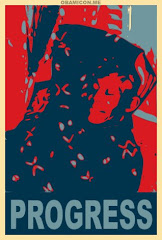
Women also notice different things than men about other men. "Obama walks differently to Bush", I noted to my wife, imagining the gait that the new president has, which is a softened version of the familiar strut of many black men. "Yes," she agreed, "He's more upright." I giggled as I thought that my wife was already focused on the new president's erection. It's not true, though, from what I have seen. Perhaps she is seeing in the new president a sort of Darwinian aspect, of the gradual maturation from simian roots to being more upright in stance and stride; in that sense it could be a subtle cheer that President Obama is more developed than his predecessor. The pictures that I have seen of the two presidents standing or walking side-by-side seem to show to me clearly that the 44th incumbent is longer than the 43rd for sure, but he is more rounded and bent over at the top when he walks, and he too has a shoulder slup, that I would say is more pronounced than W's. You can check for yourself. But, our man is perceived by at least one woman to stand up like a stiff stick not a piece of wilting celery. Perceptions are funny things, eh.
I wont pretend to not having a sense of pride that Barack Obama has won the nomination to the Democrats' next presidential candidate. He has stepped over a racial threshold that has been tantalyzingly hard to cross for many years. But in another sense he has moved closer to the ultimate political prize in US politics much faster than seems plausible: a first term Senator barely half way through that term (see official website).
A lot sits on his shoulders. He now has to try to sew back together the fabric of a party divided by a campaign that posed again each other the two elements of a possible "dream ticket": him, a young man of mixed black African and white American parentage--a true African American worthy of that title; opposed by her, a female Senator with a long political history who is the wife of a recent very popular president. Together, they could (and maybe still will) be a formidable electoral offering. But a lot of kissing and making up would have to be done between them and between their respective campaign staff to overcome some of the acrimony exchanged during the campaign. In truth, they were not that nasty to each other; a lot of unfortunate remarks were made, but on the political landscape they were really cute to each other. More problematic to me, as I have told anyone who wanted to listen, is the "elephant in the room" in the form of the "over attentive husband", aka Bill. I frankly cannot see how you have as a vice president someone who comes with a partner who is a very recent former president. Not just any former, either, but Bill, aka "America's first black president". This ex is a larger than life character, much more loved than his wife, with a bunch of policy ideas still in his head, and an apparent inability to stay in the background. Maybe it could work but not in my head. It could make for a terrific TV series, though. You can imagine the introductions: President Obama, Vice President Clinton, former President Clinton, my lords....
Now that Obama has the nomination, and now that Hillary has nearly (still not quite) acknowledged that he has the nomination--a process that has more like pulling teeth and filled with a certain denial that was incredible--comes for me the real test. America is about to show how much it has changed in terms of racial tolerance. It passed the first test of nominating a black man. Some sociologists will explore the way people chose between two historic choices--first black man or fist woman. To me the chose the more appealing candidate who was also more promising in terms of offering a different future. Sorry, Mrs. Clinton, analysts will show that you offered more same-old politics. Obama's "hope" message means something. Now America has to show if it has the stomach to be led by a black man. This is less of a challenge given that many pillars of American life already have at their head a black man. But it will still be a big ask. Obama's position on Iraq will be one of the key elements in his favour, I believe: it's hard for John McCain to shed the mantle of Dubya-bis.
If Obama becomes president he will be plunged into real politics and the needs of national and international balance. I'm sure there is wide suspicion that Obama as president would be tempted to favour blacks, but in American national politics this is less of a concern than at the local or regional level given the true minority status of blacks in the country. On the other hand, if blacks do not receive some notable favours they may quickly damn Obama as being "just like the rest". It will be interesting to see how he moves to these varous tunes.
The world has changed a lot in terms of gender roles. With the possibility of a Hillary nomination I suspect that there was a great hope that she could introduce female leadership into American national politics as a real force--no disrespect to Condaleeza Rice, but no one voted for her. Sometimes arguments that a woman's leadership has a different feel than its masculine counterpart make sense, but at other times it seems just talk. Having lived through the leadership of Margaret Thatcher in Britain I did not feel any special gentility from her style of leadership; if anything the country took on a hardness that was really hard to stomach. True, I lost a job because of her policies and I lived in parts of the country where the local economy was transformed radically by her policies promoting privatization and ending nationalisation.Telling people to "get on your bike" did not sound like the right motivation to people whose livelihood was being wrenched from underfoot; it's a long ride from a Welsh mining village to the London suburbs. But the different perspective that can be brought by a woman could argue that Obama has a duty to seek a female VP.
So, let's move on to the next phase, with the two presidential candidates duking it out through November. It has already been a fascinating set of contests so far, and I'm sure that we have a few more interesting episodes ahead.
Now that April 1 is behind us, time to get back fully to serious business. My pre-April 1 post alluded to a theory/opinion about working women who employ women to work for them (see March 31 post). I have had several comments and requests to expand on the opinion/theory. It's not fully formed but laying it out here may help me do that better. This is based mainly on observation, plus some thinking about what I have seen and heard. What little I have read so far does not make me change my basic views.
For "working women" I make no distinction between those who leave the home to make a crust and those who stay at home to do that. I've seen plenty of both (albeit fewer of the latter). Here are my thoughts, and they revolve around various states, and causes, of guilt.
Part of the guilt is associated with childrearing. Many working women harbour serious guilt about not staying at home to look after their children. They are torn between the possible "sacrifice" of a career to rear children and the sense of obligation that comes from feeling that bearing children necessitates rearing them yourself. So they fight with "I need my career for [my self esteem], [to give me intellectual and financial independence], [to make worthwhile my years of study and training]", etc. Some of this guilt stems from a sense that domestic work is "low grade" and therefore beneath someone of a certain intellectual and social standing. Having decided to work, what then to do about rearing the children. (Some "modern families" agree that this can be done quite well by the father. I am not going into a debate about whether women are better than men at rearing children, except to say that each gender tends to have its ways of doing things and childrearing is not excluded from that. Most children benefit from having a healthy dose of rearing by both parents/caregivers.) Having decided to let another woman take on this task, the guilt can kick in particularly quickly because children bond with those who care for them, so we see the child being on "better terms" with the nanny than with either parent, so there is a struggle to regain that "love". (My experience is that children love their parents if the parents show them love, and have a different "love space" for someone like a nanny. Nevertheless, the primary caregiver will always get a special place, and if that caregiver is not the natural parent that's part of the cake you have to eat.) These feelings of guilt can get complicated when the employee has her own young children who are not being cared for by their mother while she is working caring for someone else's children.
Part of the guilt relates to that dirty word, "money". The going rate for a domestic employee tends to be at the lower end of pay scales. (This may not be true in places like Manhattan, where it appears that "nannies" can live a good life on the money and benefits they get from the absolutely rich who are lawyers, financiers, and media persons. If you visit Central Park, it's hard to figure out what's going on as a bevvy of nannies "supervise" groups of other people's children, and look and dress quite well, with many of those modern trappings on hand such as iPods, cell phones, which take up about the same amount of interest as looking after the children.) Therefore, although a working woman can say "I work so that I can pay someone to help me do other things", she feels constantly that what she pays is not enough. In cash terms, the wages are often not bad, and in material terms (boarding, food, entertainment, life style), there are often significant additions that if a monetary value were put on them would make the "wage" very good. There is often a natural discomfort with paying someone to do a task that you can do yourself, and if you think that you can do the task well you certainly can't justify paying a lot for someone else to do it.
Part of the guilt relates to inconvenience associated with dislocation. If the domestic helper is someone who has to travel daily or maybe just at weekends to leave or return home, the pay does not usually include transport costs separately so there can be additional guilt that comes from "using the little money I pay you to take taxi, [bus], [train]" or "the little money I pay you can't pay for transport and you have to walk..." Then there is the problem of how hard it is to get to and from the working neighbourhood if public transport is poor, working hours are long, the domestic's home neighbourhood is "dangerous", etc. The guilt associated with these aspects can be offset by providing transport (the family gets a second car for the helper) or always/often collecting and taking back the helper from/to her home. So, we can often fsee women falling down in suplication when in some districts (as one sees often in uptown neighbourhoods in Kingston, Jamaica) we see the daily "trek" of workers walking to and from their places of work. Meanwhile, many of their employers are driving to and from their places of work or leisure. Images of South Africa quickly become a part of the guilt: "We are no different from the whites employing blacks from Soweto..." etc. In the Caribbean, black people are only a short step away from guilt associated with behaviour that in some ways could hark back to treatment of slaves or as black people as inferior. This can mix with the next aspect.
There can be a racial component to the guilt. In the Caribbean we still have a strong tradition of employing domestic helpers on a regular basis. Most of us are of African origin and so are the helpers. Many people from poorer islands and countries in the region find work as domestics in richer islands. So, Jamaicans are popular domestic workers in places like The Bahamas; Guyanese can be found in places such as Barbados. If they could, such workers would probably prefer to head to north America or England doing similar work for more pay, better expected standard of living, but maybe with higher living costs. People from south east Asia, central America, and now from eastern and central Europe are popular as domestics in the US. If these people are employed from the local pool of immigrants they may be viewed differently within a household than if they were brought over for the work. Some women employers are much happier with their "own people". That can make sense where children are concerned and there are particular language and cultural skills that may need to be passed on that the working woman cannot help apply.
None of these "guilt feelings" are bad or inappropriate, in my mind. However, they create a very complicated set of dynamics in a household. What I have to think about and try to understand better is whether somewhere along the line there is a "pact", spoken or unspoken (certainly unwritten), between the woman employer and her female employee. This may involve accepted states of "resistance". In the latter case, that can show up with the employee not doing certain tasks, and by extension the employer not being freed of certain "chores". It can also show up in the form of the domestic helper "working to rule", such as dealing with work only within the stipulated work hours. It can also show up in the working woman "taking back" certain chores. There are many complexities, and I will let my brain, eyes and ears float around them a little more.
I have a theory (maybe only an opinion) about the complicated relationship between women who employ other women to do housework and help look after and raise their children. Part of the theory revolves around whether the employer harbours some sense of guilt about having another woman who is possibly also a mother/homemaker working to make the employer's life easier. I won't elaborate on my thoughts now but just offer a taster with some photographs. One of these women is the employer. The other is the employee. Can you tell who is who? There won't be any prizes for guessing correctly.
One piece of research on the topic that interests me is byLaurie Ousley, entitled "The Business of Housekeeping: The Mistress, the Domestic Worker, and the Construction of Class". However, to understand the complex relationship between women employers and women domestic employees, you need to go back in history, to "A Treatise on Domestic Economy", by Catharine Beecher (see reference), one of the most prominent of American domestic economists in the 19th century, and women "liberationists". Beecher aimed to codify domestic duties and emphasized the importance of women's labour (see reference).
I'm going to leave the subject there for the moment and wait for the guessed answers.
Two articles in this weekend's Barbados Advocate struck me. The first quoted the Minister of Education, Cynthia Forde, who asked that "[Bajan] Men be given an opportunity to prove themselves." She meant to show that they have good character and can make a valuable social contribution. There is no doubt that men are accomplishing, but there has been a tendency to either not see this or to dismiss it, even to the extent of suggesting that it is otherwise (as happened recently with the results of school 11-plus exams, when boys took most of the top 10 places, but one newspaper's headline flagged that on average boys were doing worse).
Elsewhere in the Advocate, there is a very challenging assessment of the changing roles of women and men in an article by David "Joey" Harper (entitled "Woman's quest for freedom"). This leaves us lamenting that despite the abolition on slavery, black people have not reached emancipation--and may never get there. While talking about the changing (not interchanging) roles of men and women, he really is attacking what is happening to parenting and by extension, the family. Both are disappearing, and being replaced by surrogates.
These are interesting salvos in a deep debate that the black community needs to have. Many have seen the sharp visible decline of black boys at the summit of education (go to any graduation ceremony to see this up close). When we read the papers, we see some of the reasons: the crime pages are almost all about black young men; the "family" pages are about the unfaithful men (though often silent that these slips are mainly with other women!)
Men are finding themselves dislocated in many societies, but I fear more so in black communities in the Caribbean, America, and Europe; Africa's experience is different. There is some very interesting research on the many faceted issue of racial identity, which is more of a problem for forced or voluntary migrants (see article on "Sexuality in Men of Color"). Additional research on "marginalized" black men is also revealing (see extract from Alford A. Young's 2003 book "The Minds of Marginalized Black Men: Making Sense of Mobility, Opportunity, and Future Life Chances"). The problem black men are facing may be due to a heavier dose of patriarchial lifestyles, and yet another hangover from our slavery background, which meant that men were abused savagely and physically by their masters, and did likewise to their women young and old. Black men may now be reaping the whirlwind.
No matter how many "enlightened" black men there are, they are outnumbered hugely and most black men still "don't get it" when seeing women in new and at least equal roles, and in trying to treat women with gentleness and care. But many black women also "don't get it" that men are universally being diminished and feeling this. Two wrongs don't make a right and our societies have to grapple with this challenge of new roles and equality for the sexes.
All comments will be moderated before publication. All comments should be made with an identity; this helps others follow a thread of remarks. Comments submitted anonymously may be rejected. If comments are not meant for publication this can be indicated and I will respect this wish when moderating.