Welcome

Dennis Jones is a Jamaican-born international economist, who has lived most of the time in the UK and USA, but who moved back to the Caribbean in 2007. This blog contains his observations on life on this small eastern Caribbean island, as well as views on life and issues on a broader landscape, especially the Caribbean and Africa.

*NEW!!! LISTEN TO BLOG POSTS FEATURE ADDED!!!*

*PLEASE READ COMMENTS POLICY--NO ANONYMOUS COMMENTS, PLEASE*

*REFERENCES TO NEWSPAPER OR MEDIA REPORTS ARE USUALLY FOLLOWED BY LINKS TO ACTUAL REPORTS*

*IMAGES MAY BE ENLARGED BY CLICKING ON THEM*

*SUBSCRIBE TO THIS BLOG WITH RSS FEED OR VIA E-MAIL (SEE OPTIONS IN RIGHT-HAND COLUMN)*


______________________________________

**You may contact me by e-mail at livinginbarbados@gmail.com**

Guest Book

Wednesday, July 15, 2009

It Really Doesn't Matter Who You Are

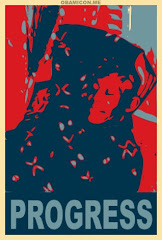
When I travel I like to see which, if any, of the issues that are resonating in the region are also sending vibrations elsewhere. My week in Boston was coming to a close, and my elder daughter and I were on the last day of our quality time together, before she headed back to Virginia and her mother. We decided to go to see the Shepard Fairey retrospective at the ICA (see details). That he had created the now iconic poster of Barack Obama was enough to be excited about. That it was the day of the Major League Baseball All Stars Game, with the POTUS due to make the first pitch was also momentous. So, I'm not sure how we were derailed and ended up instead making a tour of Massachusetts State House, on Beacon Hill and then walking the city in the area around Boston Common. I guess that some civic genes were pulling us that way.

The State House tour itself was interesting enough, given by a young intern on holiday from college. Massachusetts had many key roles in the creation of The Union and its history is so rich that a visit focusing on that is warranted. I was also intrigued to be in a state capital whose governor was a black man, and also a close associate of the POTUS, Deval Patrick.

But on to resonance. As I walked through some corridors looking for my offices, I heard the voice of a man clearly making a set of remarks to reporters, and of all things on health reform (see NY Times report). I listened for a few moments and took a few pictures. As the press report notes, "The new state budget in Massachusetts eliminates health care coverage for some 30,000 legal immigrants to help close a growing deficit, reversing progress toward universal coverage just as the US Congress looks to the state as a model for overhauling the nation’s health care system." The critics' main plaint is that the cut, which would save an estimated US$130 million, unfairly targets taxpaying residents.

The Governor now has a fight on. He has proposed restoring US$70 million to the program, which would partly restore the immigrants’ coverage. But legislative leaders wont have it, arguing that vital programs for other groups would have to be cut as a result. The cut, which would affect only non-disabled adults from 18 to 65 years old, would take effect in August unless the legislature approves Mr. Patrick’s proposal. Ding-dong. Round one.

I thought back to the claims circulating in Barbados about the pressures being imposed on critical services by illegal immigrants. Still waiting to hear some figures, but in the Caribbean "soon come" means something. But, I smiled to myself thinking of the ballooning budget deficit the government there has and that it cannot save money by eliminating coverage for illegal immigrants--they are not covered. Would they think of eliminating it for legal immigrants, though?

The policy now in play in Mass. is the kind of thing that makes legal immigrants say "Hey! That's not fair."

I head back to Bimshire today. I wonder if the vibes from up here will find there way down there.

Monday, July 13, 2009

Take Me Down To The Ball Game

I have not lived in the USA for a while, but get enough opportunities to visit for more than a few days. I am amazed at myself, however, that I manage to do that after the horror stories I sometimes have to live getting into that country. This trip was a bit worse than usual. Headed to Boston, to see off the 'trouble and strife' on a family cruise to celebrate her parents' 50th wedding anniversary, we headed through the 'hall of horrors', aka Miami Airport. Everything was fine from the time we left Barbados, and everything went wrong as soon as we landed in MIA.

Cut to the chase. We looked forlornly at the baggage belt, which neither moved nor shook. "American Airline regret to announce, the luggage from flight 602 will be delayed...at least 15 minutes...due to a technical problem...the baggage door won't open...the delay will be approximately one hour..." One panicked lady ran to the representative to explain that she would miss her connection and would not reach home today. "I fully understand, madam...." Why did he say that? "I DON'T THINK YOU DO!" she hurled back at him in a flood of tears. We waited patiently, seasoned travellers that we are, and my wife read a magazine. I watched people. With about 10 minutes to spare to boarding time, our bags arrived and off we wheeled toward the gate. My lady loved that, as she wants to exercise whenever she can, and having to hurtle between concourses at MIA was a necessity not a wish. Go Usain! We managed to have an otherwise sour disposition sweetened by the security officer at the concourse: a tall, black man, who looked a little like the comedian, Sinbad. He was cracking jokes and cracking up everyone. "Why y'all touch my rope? Ah-ha. That goin' be trouble....This is Concourse D, smile...If you cannot smile, please go to Concourse C...Raise your hand if you don't have a laptop...Good, Best Buy has a sale on in the city..." I tried to enter the spirit and asked him from what platform our train was leaving: "Oh, a funny man..." he quipped.

Arriving in Boston, we were bathed in balmy sunshine and warmth. "It's been raining for the past 40 days, and now you people bring sun from the Caribbean. Thank you," said one lady. We got into line for a cab, and I'm not sure why it irked me but as soon as the waddling, Armenian-looking driver approached and pointed to the trolley for me to pull it down the curb, I had a Hulk moment brewing. He motioned to me to life the suitcases into the trunk. I asked, "Would you like me to help you?" He smirked, and replied, "No, lift them in." Well, my brain went into a warp drive of irritation: "Would you like me to drive the cab too?" He got furious, and told the dispatcher that he was not going to take these passengers. Fine, I told the dispatcher, and let's have his licence number so that we can have him suspended for refusing the take these (I wanted to say 'black') passengers. He flubbed and said ridiculously to the dispatcher, "I'll take them if you will vouch for them." The dispatcher thumbed his radio and looked at the sidewalk. Downtown bound we were, and the ride was lovely for the silence that came from in front. I did not even bother to look back as we reached the hotel and motioned to the porters to deal with the bags in the cab, with an extra dig that they might need to help the cabbie get them out of the trunk. An Haitian porter looked at me quizzically and laughed "That's our job."

Boston is one of those northeastern cities that I like, not least because it feels to be on a human scale, not like The Big Apple. The lay out of the streets reminds me a little of London, as they meander, and the guides explain that they were laid out from the old cart routes. Makes it also a bit like the roads and streets of Bimshire. I also like that it has a lot of brick facades, also similar to London. The family crew got into full swing and the marauding band of 17 wound its way around shops and eateries for a couple of days. My elder daughter jetted in on the Saturday morning, ahead of the cruise departure, and had a brief love-in. I don't cruise on water, so would chill with her over the weekend. Ahead of that, we linked up very swiftly with a friend of my wife's with whom she had lost touch but whom I had found via her daughter, our god-daughter, on Facebook--naturally. The friend, from Boston originally, but part of our DC church, was now back on home beat and helping to solve problems for the homeless.

We waved off the cruisers, as they were loaded into three minivans and taken to the port. We focused on our plans for a stroll in Quincy Market, and beer at Coogan's Bar that evening. The next day, we had plans to sample America's main religion.

Fenway Park, home of the Boston Red Sox, is a magnet for baseball fans.
I wont go into the team's history here. I just wanted to make sure that my legacy would have "He visited Fenway, and saw the Sox win." Trust me, I am no fan of the Red Sox. Au contraire, I was raised during my years in America, on the hard road....supporting the Baltimore Orioles, one of the Sox's arch rivals, in the American League East. When I went regularly, the Sox knew their place and were not just running away with games. Times have changed and glory days are back.

What I loved immediately about arriving at the ball park was how it was like those old football grounds in England. Set within a town and having normal things around it, like streets and shops and places to eat. In Britain, that's how it is. Not, the modern American way of mega-stadium surrounded by mega-car park. No, you took the subway ('The T' in Boston...that's a pun, I think) and then walk 10 minutes with the large, swaying crowds.

Food and drink are all so important at a ball game.
"Beer man!" is as popular a chant as "Let's go, Red Sox!" Sadly, I could not do justice to kettle corn, or Fenway franks, or a good ice cold Bud. I had been attacked by that modern virus, the Sunday brunch, and had had a fill of food before the game. Nice enough that I had been able to do so in the shadow of the tall ships that were in the harbour. But, I had to waver and eat one of those onion and pepper-laden Italian sausages, midway through the 4th inning. The Red Sox were on a tear and putting the game to bed. Poor old Kansas, like Dorothy's dog, was being yanked around. They barely did more than send up three batters for a few balls each then were back on the field. The Sox were lashing and getting men on base regularly, keeping Kansas baking. The Royals, though they played like paupers, sent up five pitchers. The Sox, just used one, and he did the full day's work, pitching a complete game (start to finish) and getting a shut out (Sox won 6-0) and doing it with fewer than 100 pitches (94, in fact). That's historic--not 'the most unique' as an American might say.

Satisfied ball fans wound their way back on The T and were in the city again in no time. A bit tired. But contented. All would be back to normal, after a trip to Chinatown to find the place for some very unballpark-like food later in the night. Have to say that we did have a ball.

Sunday, July 12, 2009

The Sands Of Time Tick Against The Boardwalk

Several months ago I sang the praises of the new boardwalk at Hastings (see On the boardwalk: If you build it we will come). My wife has become one the boardwalk's regular visitors for a midweek stroll with our daughter. I don't go often. I freely admit to not being a regular walker there but had met a film crew from a nearby French-speaking island who were working with the Barbados Tourism Board to make a film of the new attraction.

So, I was saddened to receive yesterday a YouTube video from a friend, which has also been posted on Facebook, and seems to show that the boardwalk is being overtaken by the ravages of nature and a good amount of neglect, for which blame will fall on the Coastal Zone Management Unit.


The video was produced by a Barbadian photographer, Andrew Hulsmeier, who has produced a few other videos about aspects of modern Barbadian life.

Just a few days ago, an article in The Advocate, by Nicholas Cox, praised the boardwalk for "the impact of the Hastings boardwalk, which is attracting hundreds of people on a daily basis" (see Advocate report, June 20, 2009). One of comments about Barbados is an apparent wide gap between what should be and what is. It is very sad that within a year what should have been a pleasant eyecatching addition is now an eyesore.

About the time of last year's US presidential elections I received some enquiries from prospective American tourists about life in Barbados. When they got to the island one of their pastimes was walking the beaches to try to find shells and washed glass. They too had seen the video and sent me comments yesterday that they were appalled at the apparent neglect at the boardwalk.

The concerns I had voiced about the environmental aspects of the boardwalk were more directed at the turtle nesting areas and whether those alongside the boardwalk would help keep it tidy. I never foresaw the sand taking over or waste building up so quickly.

It seems obvious that everything on the island is part of the face of its tourism and obviously those attractions in the areas where tourists are numerous are even more the face that is often seem.

I bumped into the Minister of Tourism last week at a kids' birthday party, and we got talking about how the tourism sector shoots itself in the foot. Then, we talked about how some hotels make prospective guests feel unwanted with a 'take it or leave it' attitude. He commented that he was very aware how negative feedback spreads, and pointed to the comments now easily found on TripAdvisor, which are generated by visitors to the island. Tourists have no need to be kind, and often focus on negative experiences faster than positive ones--the latter being the expectation, and the former being part of the pack of disappointment that they would wish their friends to avoid. I know that the Ministry is monitoring the comments about Barbados, but which they cannot control. Once an image is damaged it stays that way for a long time.

I am going to see for myself how bad things are at the boardwalk as soon as I return next week. I would be pleasantly surprised to find that the situation was much improved by the time that I get there.

When times are tight money needs to be seen to have been spent right. The B$ 18 million is not going to look to have been well spent it this project gets run into the ground within a year of its completion.

Friday, July 10, 2009

I like Shopping...With Your Money

I told them directly what I thought of their service: it was poor and they needed to do better. "Thank you very much," they told me. "Can you help us improve?" Eh? I was not sure if I heard correctly. But, yes, they were asking me, the uber-critic, to give them a kick up the rear at their request. I wondered what was the catch. Would I have to don shirts with their logos? Were they going to get me to hold placards showing ...? None of that, they wanted me to go shopping, with their money, and I could keep what I bought. This was getting to be quite unreal.

Next, was training. I had quickly jumped ahead and figured that they would be taking me on one of those motivational trips to Las Vegas to fully incentivize me, while I played blackjack or .... Instead, I got an e-mail message inviting me to a 'webinar' (a video presentation over the computer). Drat. Not even a spin to St. Kitts and a day hanging around with LIAT in Antigua? I was a bit dismayed, but still excited. Would I have to wear a mask so that I was not recognized? No! So, for one hour I was 'unidentified from Barbados'. I felt nameless and faceless, and that's how it was supposed to be.

They wanted me to shop from the start of April, but I told them that I was due to travel, so would do it after I returned. But, a mix of excitement and a decision to carve out a couple of free mornings, meant that I could do the deeds before I flew. So, scenarios in hand, I was off to the stores. I wanted to be the 'shopper from hell', or the 'young but dense shopper' or the 'shooper who had just one more question'. I could be all of those and stay true to the role of mystery enquirer.

The company has a handful of stores around the south and west of the island and I visited three the first day, then the next day went to two. I was not the same in each of the stores, because the situation was slightly different each time. I was surprised that so many differences were facing me: one store was small, another very large; one was on a main street, two tucked into a mall. I was also on the look out for information about special deals, which had just been launched. Overall, I found that the stores fell into three camps: two very good, one very poor, and two just so-so. I bought the merchandise that I wanted. It was funny that although it is a newish item, it was not in stock in most of the stores: in some, it had been sold out, in one they were still waiting for stock from HQ. None of the stores tried to do any upselling--like accessories. None of the stores mentioned the special promotion! That was a shocker, and when I relayed that back to my contact at regional corporate HQ, they too were dismayed. Why had they bothered to do all the training if the staff were not trying to get people hooked up to the new deals. Lastly, everyone in the stores was supposed to be identifiable, but none of them wore a name badge: the best reason I heard was that "We're waiting for them to be printed." That's better that saying the dog ate it or it was left at home.

My best experience from this whole affair was to see the effect of a previous run-in with this company. I went into what was for me 'the store from hell'. I was asked to wait by a very nice young man, and within seconds was told to go to a counter. No one was there, so I pretend to start my query, talking to the cash register--to make the point that if I were told to go for service I was ready to be served. A lady whom I had met before approached me: "Good morning, Mr. Jones....Mr. Dennis Jones." I was in a dead faint in a flash, as she followed that with a winning smile. "I remember you. We have the same family name." Child, whatever it takes. As I was explaining what I needed to have done, I got a phone call. "I'll be with you as soon as I'm done," I was saying when Miss Winsome chimed up, "There. Finished." Finished? But normally the computer does not work and you don't know how to manually override the system and I am expected to stand patiently for an hour while you speak to a technician and make me miss my next appointment. You cannot be finished yet. It's only been two minutes. I felt cheated, but happily so. "You have a nice day and come again soon." I knew it: she was making a pass and it was my body she wanted...again the sweet smile. I left and glanced back one more time. She was still smiling. Scary. Had I had that effect from the blue light 'spanking' I ahd given the staff a few months ago?

Maybe it will all turn out right. The expectation of good service does not need to be like sucking a lime. There is no need for NISE, just nice people who care for what they do.

Life Is No Tea Party

When I think of Boston, I imagine struggles for independence, a city swelling with academic heads, and jerk food, though not in that order, mind you. So, as I landed at Logan Airport yesterday afternoon, I had to make sure that I was ready to deal with the right Boston. But, jerk food was off the menu, because I was not arriving in Boston, Jamaica, where jerk food was invented. Instead, I was about to set foot for just the third time in Boston, Massachusetts--home of the other Cambridge and seats of learning, such as Harvard, MIT, and Tufts. My disposition was bright, however, because we were told that the balmy sunshine must have come with us from the Caribbean: people mentioned that the previous 40 days had been rain filled.

The first time I visited Boston, it was on a driving tour from my then home in Virginia, and took in many of the sights of the American War of Independence. In particular, I went to Lexington, where I visited friends in a typical American family--the second generation of German immigrants. I got to see many of the landmarks connected with their 'fight for freedom', monuments to Paul Revere, The Minutemen, The Boston Tea Party and "No taxation without representation". The second time I visited Boston, my current wife was attending an executive training course at Harvard, and I went for the weekend. It was the fall, and the temperatures had fallen, not too low, but low enough. I got the chance to visit many of the hallowed seats of learning in the other Cambridge. At that time, my first daughter was just nearing middle school, and naturally my mind flitted to where she would attend university. Note that I said "would": I am now of the generation, having been the first in my family to attend university, that thinks its children will get tertiary education. I loved the campus and its flavours of history. It was not really like those unquestioned seats of English learning, Oxford or the real Cambridge. But, Harvard was my first visit to an American university and I was impressed, with the buildings, the campus, and the sense of calm.

Here I was in Boston, Mass., again. This time to watch my wife's family set sail, when her parents celebrate their 50th wedding anniversary with a cruise. I do not do long boat rides, and I have plans to socialize while they set off onto the sea. As luck would have it, I get the chance to reconnect with colleagues from my African sojourn. My local economist in Guinea (a Fulani and Muslim), whom I sponsored to take a masters degree at Williams College, has been asked to stay on as a research assistant. The leader of the IMF missions to Guinea (a Peruvian Jew), who was posted to Ghana at one time and was just finishing a posting in Burundi, has just started Hebrew Studies in Boston. I also hope to reconnect with a white American friend from my church in Washington, whose black adopted daughter I had taught in Sunday school, and had found me on face book. The girl, now well grown up, had told me that she and her mother would be heading to Boston, her mother's home town, for the summer, and they arrived a few days ago.

But, my thoughts. America fought hard to get its independence and its nationhood, a set of struggles that pitted the colonialists against some of those in their native lands, and for me that means mainly the British. America also had its internal struggle for nationhood, with its Civil War, that long set the line between those who were for or against slavery. Those two things are in my mind as I look onto the debates about Caribbean regional integration on the one hand, and the related matter of illegal immigration to Barbados.

I have long wondered if people from the English-speaking Caribbean know what they have gained without much struggle. Haiti fought hard for its independence from France. Many Latin American countries also had to fight mainly Spanish and Portuguese colonial rulers for their independence. We got our independence by administrative fiat; we did not spill much blood. Many Caribbean islands still do not have independence from the colonial rulers, though they have a greater degree of autonomy now than before. Our ancestors, in some cases, did fight, to different degrees, to get freedom from slavery, but in the end it was handed to us again by administrative fiat, rather than as the result of our struggles against our captors and masters.

We are clearly nations made up of relatively recent migrants. Our populations are not made up only of the African slaves' offspring. Countries such as Trinidad and Guyana had their numbers swollen by the introduction of indentured labour/servants. Like slaves, such servants were shipped; could be bought and sold; could not marry without the permission of their owners; were subjected to physical punishment; and saw their obligation to labour enforced by the courts. To ensure uninterrupted work by the female servants, the law lengthened the term of their indenture if they became pregnant. But unlike slaves, indentured servants could look forward to a release from bondage. If they survived their period of indenture, servants would receive a payment known as "freedom dues" and become free members of society. It is easy to forget, or not know at all, that many of the original European settlers in the English-speaking Caribbean during the 16th and 17th centuries were indentured servants (English, Irish, Scottish and German, for example). So, slaves and indentured workers are very much part of the earliest ancestral chains in the region. After the abolition of slavery in the mid-19th century, the demand for workers in sugar plantations could not be met by shipping more slaves, so was being filled by indentured workers from China and Portugal, and later the Indian subcontinent (mainly from what is now India, but also the current Pakistan--very different places with very different religious and cultural bases). These groups had a clear leg up and once free used that to build an economic base largely as merchants, though also as plantation owners. Some of these indentured workers became numerically and proportionately significant in Trinidad and Guyana, especially those from the Indian subcontinent; this was not the case in Jamaica (except if looked at in some smaller areas).

Out of that mixture has come many things. Think about the names that people have in the region. I love it that I know a true Jamaican called Kevin O'Brien Chang--a one-man melting pot.

Now, we are reaping a bitter harvest from this mixture of seeds. I am not sure how much of the history of the region seeps into people's thinking about issues. Racial and ethnic divisions seem clear in Trinidad and Guyana, and sometimes they are openly hostile in both places. My reading tells me that much of that comes from politicians playing a 'race card' to build support and better identify their opposition. I cannot really say if deep racial animosity exists outside these two countries. The recent discussions in Barbados on illegal immigration have seen the seeping out of some clear racist and ethnic hostility aimed at Indo-Guyanese, but while some of those voices are loud and their words sometimes vehement and laced with violent intent, I do not know if this is a small minority speaking or a much bigger part.

I am not a political analyst, and am still unclear what part of the recent moves against illegal immigration to Barbados is a familiar political play that often surfaces in hard economic times, or if it is really grounded in a firm policy line. My fear that it is too much political gets some support from the limited factual support that has come with the stance, which suggests that things are being plucked out of the air and waved like flags that attract attention. One real event with the glib addition of "this is not isolated" but with no evidence of how widespread it is not what I should hear government ministers saying to underpin a policy. But facts can be brought to support a policy later, by which time much social damage could have been done by the spread of anecdote and conjecture. I am going to try to see if, from a distance, the flurry of discussion in Barbados on this matter is clearer.

I am also going to indulge in a little love for that great American pastime, baseball. When I first went to Washington, I got into a group of baseball fans, one of whom was a Ghanaian who had studied at Boston University. We became great friends, but not fans of the same team: he loved the Red Sox, and I supported Washington's 'home' team, the Baltimore Orioles. We shared many a beer and hot dog and barbecued pork sandwiches while watching home runs batten in an pitches striking people out. I cannot persuade him to come to Boston this weekend, when the Orioles happen to be in town. So, I will have to root for the Os without being able to get into his face. I will root a bit quietly, though, because I am a visitor and due respect is needed for the hosts. The hotel concierge told me that getting to Fenway Park by subway is a cinch. My mind is made up and I am raring to go. Will I be surrounded by my friendly band of black and white Americans, a Peruvian Jew, and a Guinean Muslim? Who knows. Play ball!

Wednesday, July 08, 2009

The Best Headlines I Have Seen

I am not a great follower of Calypso. As a boy, my parents listened to Sparrow a lot and I liked the beat, but other sounds took up the space in my head. As I grew up, I really did not move in groups that were driven by Soca. It was really only after I went to the US that I met a lot of other Caribbean people who had not lived outside the region much, and many more who were from the southern islands. I then got a full dose exposure to Soca. I liked the energetic pace for dancing, but like so much music, I thought the lyrics were weak. I loved social commentary, but Soca did not seem to have much. Fast forward, I move to Barbados. My wife, a totally unreconstructed Bahamian, cannot take two breaths after the mention of the words 'Crop Over' before she starts railing about "That is not culture." Yes, dear. "It's not Junkanoo!" You're right, my honey. "Look at that. Bought costumes. They should be making them at home." Absolutely, my cup cake. There is no fury like that of a Bahamian whose culture norms have been put out of joint.

I have three sets of friends in Barbados who have tried to make up for my Calypso-Soca deficiency. There is a couple from St. Andrew, whom I met in Washington, and now live in and around Barbados. They are true limers and given have a beat will be seen tapping bottle and moving with a sultry rhythm. That one of these is amongst the region's best economists should never be held against this son of the coral. Another couple are a Bajan-Trini combo, which never lose a chance to pump up the volume and bring in friends who know how to win' up de bumper, and tap bottle, get inna conga line. They even had me win'ing up last July at some splash event. Me! I don't do water sports. Then there is the Guyanese couple, who have made Barbados their home and economic base for the past 40 years and host a great Crop Over lime each year, and always manage to arrange for a heavy downpour of rain so that we can have a great wet fete. They have tried to get me to 'chip' (or is it 'trip'?) down the road behind a truck. Nah: wife would not like that. They wanted me to put on mud. Na-ah: wife would really not LIKE THAT. They suggested that I go to a tent. Why would I do that? I loved camping, but also had some of my most traumatic holiday experiences under canvas in Europe, when wind and rain turned what was supposed to be a 'relaxing time' into total chaos. Waking up in cold water is not fun. Coming back to a camp site to see tent hanging from a telegraph pole tends to take your breath away. Tent? No way.

So, as luck makes it happen, another Bajan came up to me and said, "You have to come to Headliners, man. Tuesday....I will be performing. Social commentary." My eyes popped. Performing? What kind of performing? He's going to be the MC or something? I had just dragged this youth out to play tennis with me and a few other fogeys, and I wondered if the build up of lactic acid from not having played for 10 years had fried his brain cells. I looked at my partner and shrugged my shoulder. "Let's go together," he said. Now, this thing was getting out of control.

Conspiracies often happen while you are happily thinking that all in life is normal. An old Scottish friend, with whom I had shared a football field and a few beers, arrived in Bim a few months ago. My wife met him at a meeting and he asked after me. We spoke on the phone and played tag with messages. Three months later, we met again at a diplomatic cocktail affair to celebrate Canada Day. Smiles and a bit of reminiscence followed. "My wife's due to travel, so let's arrange to go and get slammed," I proposed to him. "Greeet edeea," he replied in that distinctive Scottish lilt. "Whe' dya wanna goh? I know nohwhe' hey." I suggested the Carib Bar, where we had once sunk a few bevvies during a Masters football tournament. But, now I had to call him and suggest he go to a Crop Over tent--and I had no idea what I was suggesting.

Arriving at Headliners, at The Plantation, I was of course floored that there was no tent at all.I had envisaged having my body and others pressed together and bound by sweat and a clash of cologne, perfume, and deodorants. Instead, I found neatly laid out chairs. This is a theatre. I looked puzzled at my Bajan bud. "Where's the tent?" I asked. "This is it," he laughingly replied. He had to soothe me with a beer. We found one of the few seats still available: the 'tent' was due to get going at 8pm and here we were at 7.30 and the place was full. I wonder about Bajans: so totally English for timeliness. But, who should be sitting directly in front of us? My Guyanese Calyspo-holics! I laughed with them and asked whether their papers were in order, or if they had had anyone knock on their door at 3am. "Oh, yeah! But we told them to just f**k off." We talked a bit about fete-ing and they again tried to get me to commit to following some truck for a bit of wuk. "I'll get back to you," I stammered.

My Scottie was late--he thinks all of the Caribbean is like Jamaica. The ushers wanted the seat I was trying to save for him.

Then up came the first act. Alvin Toppin screamed "Here on stage, with his social commentary is 'Gungadin'" [changed to name to protect the innocent] "Wuhloss!" There, dressed like Joseph in a technicolour coat and a white cap that looked like a cheap imitation from French Foreign Legion uniform, was my man. The inviter. Mike in hand. Finger in air. Giving me 'lyrics'. I folded in laughter and pride all mixed up. This boy is more talented than I realised. He could sing and he could hold the audience. I don't know what the judges are looking for, but the boy became a man and would get my vote. He was not of the same class as 'Blood', but he could hold his own.

I'll be honest, the spread of talent was clear. But, I was amazed to see one of the young elite boy tennis players, there with some of his group, doing a Kadooment song. Some of the lyricsneeded serious work for better content. Some of the delivery was less than stellar. But, everone should get a chance if they want it and have the courage to get up on the stage. So credit to them all.

I'm always glad to get more of a good thing. So, already, I am convincing friends to make a visit, and as soon as I come back from the US next week, I will be heading to the tents again.

Tuesday, July 07, 2009

Gimme Water!

The sounds or running water are amongst the soothing things in life. Music composed with water as its theme brings calm, and Handel's Water Music is a perfect example. So, why does the topic of water in Barbados bring ire?


When Mr. David Thompson donned his Finance Minsiter's cape in mid-May and presented the 2009 Budget, he filled Barbados with fear. He warned that an increase in water rates "has been requested" (so polite). Water might not have been flowing freely through the pipes, but it started to flow freely from many eyes. He dangled the sword of Damocles: "The increase as recommended by some analysts was in the vicinity of 100 percent of existing rates. I consider this high and not practical in the current economic environment." But, like the stall holder in the market, he was, however, going to give us all a bargain, and with the announcement last week, we heard: "Not, 100 percent. Not 90 percent...But only 60 percent."

From the time of the Budget, knees (which had no water on them) had started quaking. Teeth (being brushed or not) had started chattering. Wo-yoi! People had been thinking about how they could adjust to having to pay much more to bathe and wash their cars and water their plants. Wo-yoi! People flagged ahead of the increase that it would be hard on the poor man and woman, and that some people really were already using as little water as possible, short of just lying down and dying. But, I heard richer people squealing too: "Only one shower a day?"

But...but...We had heard stories of how bad were the finances of the Barbados Water Authority (BWA), and this was going to continue for some time; worse, hardly any cost-cutting was possible. The 'caped crusader' had told us in the Budget: "Approximately B$80 million of BWA’s operating budget is comprised of costs that cannot easily be reduced without significantly reducing the level of service." For the arithmetically inclined, that meant wages (29%), desalinated water (13%), depreciation (12%), and electricity (29%). David slayed us with the prophetic words: "The projected financial position for the next three years indicates that BWA’s costs will continue to outstrip revenues resulting in operating losses and cash deficits. The accumulated net-loss position is projected at B$121M and the accumulated cash deficit at B$25M."

Dressed as the PM, the 'caped crusader' had twisted the knife ahead of the increase, when he exposed the level of BWA arrears (see Nation report, June 21). He reported that 10,000 customer disconnections were due each month, and that arrears were B$26 million, saying residential customers accounted for about 60 per cent of that figure. Wo-yoi! I have been one of those who argued that, before dealing with the arrears--the amounts and what was really driving customers to withhold payments--an increase would be pouring money down the drains. Can't pay now? Won't pay after an increase. Paying now? Then any large increase could push you into the non-paying group. But who listens to me?

But, I try to be fair. If I believed that I was already doing my personal best regarding water use, what could I say for BWA regarding the services it gave? I looked a little at how the BWA goes about things., I see their operations first hand, as I live close to one of their depots. But, I was pleased initially to find on the government's website, a document entitled "Improved Service Delivery from the Barbados Water Authority" (see link). It mentions jolly terms: for instance, "customer service enhancements" and "a new billing schedule coupled with greater payment options for customers" (meaning paying through SurePay and via Internet banking). It mentions too that the BWA "has also undertaken a review of the channels through which it communicates with its customers and will shortly be implementing a new communications system to enhance the efficiency of interacting with customers". (That statement seems to have been written before new communications system to enhance the efficiency of interacting with customers was operationalized.)

It reported on why arrears were as they were: "In previous months, the BWA’s billing system was behind, in that we read meters at the end of the month, billed 30 days later and gave customers 30 days to pay. With our new billing schedule, customers can expect a more timely and consistent delivery of their bills, thereby enhancing their ability to keep their payments up to date and to assist with better budgeting. The Barbados Water Authority will be reading meters daily, generating bills every day for delivery to customers who will now have 20 days in which to pay." They said convincingly (to them, at least): "The biggest benefit to the customer however, will be the elimination of the occurrence of timely payments for the previous bill, showing as arrears on the current bill." In other words, BWA wont tell you that you are in arrears when you are not. Oh. OK. I could not figure out what that did to the PM's exposition of arrears. But the bold and beautiful BWA "will be launching a renewed thrust to reduce arrears in the coming months". Praise the Lord!

The new channels of communication seem blocked, however. We hear of callers to the BWA being subjected to abusive replies when trying to seek information about why no water was running through the pipes. One caller on Brass Tacks was so upset last week that merely recalling the incident that morning and the abuse hurled from the BWA end of the phone, sounded as if tears were falling. (If so, I hope they were saved for a later face wash.) WIthin an hour of a few similar calls to the radio call-in program, theBWA responded to say that there was a burst water main and that they were working on it. This is the brave new BWA?

Now the deed has been done. Manufacturers are doing what we knew they would--announcing that the increased cost of water will flow through to higher prices for such essentials as rum and beer; dairy products too. But, guess what? They want concessions. Oh, really?

Most people believe that the BWA is a Gulag of inefficiency, and the PM/Finance Minister agrees. Again, in the Budget speech: "Too much money is wasted on pumping water of which a great deal (30% - 60%) is wasted through leaky drains, leaving residents without an adequate water service." Unfixed burst pipes. Leaks that waste water. Imagine if Amazon.com or the Post Office worked that way: would you be happy to keep getting half of the book you ordered because Amazon kept losing the pages, or only half of the letters that were sent because the postman kept dropping his sack in the river? "There you have it", would not go down well.

I read more about the new BWA: "Our overall customer service is also being improved to ensure a more timely, responsive and accurate response to customer issues....Our customers are becoming more demanding, hence the need to refine our procedures and operations to cope with a more demanding customer. Customers have been demanding a speedier response to their issues from burst pipes and mains to water outages, water discolouration and billing queries....An improved issues-tracking system is coming, which will allow our internal customers to track each issue from beginning to end in a seamless way." These customers are just too much with their demands for speedier responses. This is the Caribbean. We don't do speedier. I think that the water that is drunk in the BWA needs to be tested for the presence of some mind-bending drugs.

Minister Haynesly Benn is responsible for water, and he clearly has little to offer us other than 'trust' and 'hope' : "I am trusting that once the rates go up, I suspect from just Bds$20 a month, it's going to go like $32. Don't bother about the percentage increase, dollar value, $20 to $32 sounds steep to some people, but I'm hoping that they would minimise our use of water... I'm trusting that Barbadians would find sensible ways to save water throughout the house."

Minister Benn said there were areas where BWA workers could help save water, but were hampered sometimes because of how the system worked. It's not our fault: Blame the system! He gave an example of workmen being sent out on a site but were could not do repairs in an area close by, because they had to get the proper paperwork and instruction from the office first. Meanwhile, water was gushing down the drain. In view of that, Mr. Benn said he was looking to the implementation of the Cabinet-approved 24-hour work system for key operations at the BWA. I don't see the connection, but there you have it.

No sweet music is ringing in my ears on this matter, and while words flow freely, they wash over me as having little bearing on what really needs to be done. Instead, I feel the drip-drip of water torture; not quite water boarding, but pretty bad.

Government should be about making hard decisions, but it should also be about getting people to support those hard decisions. The handling of the BWA and its financial and operational problems is beginning to look emblematic in not following that principle.

Sunday, July 05, 2009

Parse The Duchy: What Is The Immigration Debate Saying?

If you have not been on Planet Barbados for the past few weeks, you will not have known that the big issue is no longer Crop Over, or the 11-plus exams, or West Indies cricket, or Michael Jackson's death, or Wayne and Colleen Rooney's beach holiday, or my step-daughter's assault on the island with her over-energetic but really fun-loving friends. THE issue has been immigration.

Barbados, like all of its Caricom fellows, is a nation begun by migrants, admittedly many were forced here as slaves, but migrants they were. Barbados, similarly, is a country that has built itself by letting its nationals go abroad to work for a time or even to stay abroad forever: to build the Panama Canal; to cut cane in Guyana; to nurse and police in other Caribbean countries; to 'help the motherland' when England called for labour; to seek better working and living conditions in Canada and the USA. Barbadians know well the value of leaving home to better oneself. I am sure that Barbadians knew and know too the hostility that greeted and still greets the new arrival in a place like Guyana, or England, or the USA, or The Bahamas.

But, to follow the current set of discussions--and I am not one who believes that a loud voice does nothing else but drown out others--it is clear that little of this has any bearing. Whatever politicians may say that a policy is not targeting a particular ethnic or racial group, you have to be kidding yourself if you did not realise that the Barbadian beef (and there is irony in that noun, given that the targets are assumed to be Hindus) is with 'Indo-Guyanese'. You get a lot of supposedly substantive arguments against this group for being 'smelly', 'musty', 'clannish', 'not like us', 'scheming', 'wanting to take over', etc. It's at that level. Sure enough, there is exploitation in this whole relationship between nationals and illegal immigrants; there is supply and demand to deal with. One of my observations has been about the relevant quietness of those with vested interests. Maybe, they are working as they need to, in the background. But, the popsters have come clean in exploiting the 'battle' by singing at each other's wake (see Nation report), as a Guyanese lady gives Bajan ladies advice on how to keep a man, and a Bajan lady retorts and tries to get back on top, so to speak.

You also get the impression that for a certain group of nationals, once the offensive Guyanese have been dealt with, then all other 'non belongers' (to borrow the terms used by Tortolans) will be on the radar screen. So, we can wait with bated breath as Vincentians, Jamaicans, and Chinese line up for their slug of opprobrium. I will line up for nights to get seats to see the Barbados-People's Republic of China match up: 280,000 yellers against one billions yellows (no offence meant).

I pointed out to some commentators that their concerns should really be focused on the English, who with their obvious wealth and love of Barbados could suck up this island as swiftly as they could down a pint of Courage bitter. The English (and let's be honest, Europeans) have a terrible history of destroying lands that they newly visited: the now-extinct Dodo of Mauritius; the Incas; the Mayans; the Caribs; the Arawaks; native Americans; African tribes; splitting up ethnics groups (Iraq, Africa)--all gone after disease and antipathy got to them, or thrown into centuries of confusion and conflict. Much as I like England, after living there most of my life, I would not want to have to settle for the hokey-cokey as my way of 'getting jiggy' when I already have the rub-up culture or dutty win' and bumper riding. So, I think the eyes better refocus before all the trappings that make this little isle seem like 'Little England' make their way for a true second colonization.

I have listened to, read, and argued with a few commentators. I wont comment on what I think about the intelligence of many of those with whom I have crossed words. I will say that they have been people filled with emotion about this issue.

I have read remarks that tell me that people will quickly resort to a sweeping damning statement rather than argue on any merits, so that they can move on with their diatribe. So, you have to wonder how someone could think that the legacy of Louise Bennett, Paul Bogle, Bob Marley, Norman Manley, and even my humble parents and grandparents, can be called the same as the common gun-toting murderous gangster who is marauding Kingston and Montego Bay, or exporting his talents to the streets of New York, or the alleys of Manchester and Brixton.

I have also been really surprised at people who are from one of the targeted nations or national groups, but are known for their experience in the use of diplomatic language; who represent or represented the Caribbean and Commonwealth; and who are well experienced in handling the media. Suddenly, they seem to think they are in a bar or hanging out at cricket and utter words that can only inflame, even with a lot of explanation of intent and context. "Intimation" is quickly forgotten. I wont repeat the words or name the people because I find the words distasteful and do not even want to be near them; they have dug their furrows and now they need to haul the hoe to get the dirt sorted out.

What previous episodes of hostility to foreigners have shown is that the line of antipathy quickly moves: today's hated minority gets added to, and quickly covers anyone who is different or so-called 'not from here'. The irony is that there are few places where any group called nationals are the real aboriginals. But, memories are short and history if often not known. You may even have people railing against people who are related to their own ancestors. When I talk to Barbadians I have to wonder which of them has a lineage that is wholly Barbadian for more than one generation: I know my circle is limited. But even the current prime minister opened the press conference in Georgetown by pointing minds towards his Guyanese grandfather. We know that the PM himself was born in England, of Barbadian parents. Many Barbadians have sought to dilute the national blood line by taking on partners from my own country--and for me, I have to ask why that choice?--or from other islands or other countries. Maybe, the otherwise ridiculous claim made by someone that Guyanese here outnumber Barbadians by 50,000-to-1, is silly but has a grain of truth.

But, let me get to the other part of the meat of this issue, politics and communication. In May, the PM unleashed a furore of criticism of himself and a country by announcing an amnesty for illegal Caricom-non-national immigrants who had overstayed, giving them six months to get regularised, from June 1. The ripostes from many quarters were loud and clear, and some loud and not so clear. Other heads of government, especially the PM of St. Vincent and the President of Guyana cried "foul". Former and current civil servants weighed in with observations about how people were being targeted and allegedly rounded up and dispatched from Barbados. The government said, "It ain't so."

The announcement came with no context to help substantiate the claims that the country's resources were being put under unbearable strain. Not a single figure was issued officially to say how many of these illegal miscreants were in the island and how many were expected to be removed by the amnesty. No indication was given of how many legalised Caribbean non-nationals would remain: this is not trivial. if you really have 50,000-70,000 illegals flopping around, and only half of them decide to regularise themselves, you still have a sizable number (relative to this island's total population. If the original number is closer to 5,000-7,000 (and the range of estimates give figures of that size), then the original 'problem' was really much exaggerated in terms of sheer numbers and the remaining problem would similarly be less. But, who needs numbers? I have heard ministers and permanent secretaries who are responsible for immigration shudder me with silence on the basic size of the issue they are dealing with. Too boot, the Auditor General put the boot in by saying in his report a few weeks ago that the management information system for the Immigration Department could not give the relevant data to manage immigration. Where have I heard this story before? Aha, the inconvenient should-do gap.

But, as this Sunday starts and I look for inner peace, my discomfort is at a new level. I heard the PM mention to a bevvy of journalists in Georgetown a number of things. He talked about people officially 'deported' (with their passports stamped to that effect) and being 'asked to leave...and escorted to the airport', and said those those things were not the same. He's right in some statutory sense, but in an operational sense, if a country asks you to leave and ensures that you do that, then materially you have been deported, whether your passport says that or not. It's a moot point under what conditions you may return; you have been thrown out. That may explain the huge discrepancy between the 4 persons Barbados says it deported and the 29 that Guyana's president says he received as deportees.

I also heard the PM talk about announcing a new immigration policy soon. Wait a minute, I said to myself. Should that not have been a step taken before the announcement of the amnesty? That promise was mentioned in yesterday's The Advocate (p9). I wondered, therefore, what would have been wrong with the following scenario:
July 2/3: Announce to Caricom heads of government (HOGs) that Barbados will be publishing a new immigration policy from August 1 (implied date in the PM’s remarks). Indicate that it may have several important elements that will affect certain Caricom national groups [this is no major secret, because of the general knowledge of from where people are coming] but it prepares the ground. [The PM also has a ready-made forum for bilateral talks with HOGs to touch on certain sensitivities on all sides, out of the public glare.]

July 4+: After Caricom HOGs meeting, announce that the new policy will involve an amendment to amnesty for certain Caricom non-nationals with effect from August 1, giving details (this is the same as the announcement in May with a June 1 start date).

My nagging question is why, with a long period of ineffective control over illegal migrants to Barbados, it was necessary to precede the general policy announcement with the declaration of an amnesty, whose context was not clear? Moreover, is/was the 2 months difference really so important and why?

Some commentators have pointed to possible sinister motives behind the previous government's approach to illegal immigration, intimating that it was to “teach Bajan voters a lesson”, intimation a plan to help build a 'permanent voting majority' from the migrant community's voting (see "Is There More To Unchecked Migration Than Meets The Eye?" on Barbados Underground). Well, whatever the reality of such contentions, the plot seemed a bit botched up because the the previous government are previous not current--they lost the election.

Some commentators are arguing that the current government has little to offer in these recessionary times and have drawn water at the well of populist sentiment and pulled out 'the race card'. It's a card played strategically and frequently by politicians and has the great effect of neutralising its opponents, who immediately seem 'unpatriotic' and 'the ones who got us into this mess'. Any counter arguments from other countries naturally sound like 'their' voices telling 'us' what to do. But the card played is really 'the jack of spades' (and for those who do not know how to read Tarot cards, it could be time to learn): it's a card that creates conflict and division, while holding unexpressed deception; it's sometimes seen as a 'golden apple' but is a true 'apple of discord'.